
Koaching the Gap®
Helping people move forward, together.
Coaching, cultural supervision, advisory and facilitation for people, teams and organisations ready to grow beyond cultural awareness, into culturally responsive practice.
Services
Four ways to work with us. Select one to read how it works.

One-to-one
Coaching, mentoring and cultural supervision.

Groups and teams
Group reflection and workshops.

Strategic advisory
Advice and bespoke solutions.

Speaking engagements
Keynotes, panels and lectures.
Foundations of our practice
Enabling Aboriginal self-determination
Most organisations are good at asking Mob what they think. Fewer are set up for the answer to change anything. We work on the second part: where the decisions actually get made, who's in the room when they are, and what it would take for a decision to land somewhere new.
Developing culturally responsive practices
Cultural awareness training teaches people things. Responsive practice is what they do with it once the training is over and the week gets busy. We help teams work out what that looks like in their own work and their own words, so it holds.
Supporting people navigating cultural and colonial load
Mob at work often carry a second job: being the one who gets asked, who explains, and who keeps the peace when talking about things that impact us and our communities. That takes skill, and it deserves to be seen. We help people and organisations name it, share the load, and value it properly.
Wholistic approaches to mental health and social and emotional wellbeing
Wellbeing is bigger than one person. It's family, community, Country, culture and connection. We work from that whole picture and build on what's already strong. We also know where our work ends and a health service begins.
Leading from lived and living experience
Our practitioners have been where the people we work with are now, and are still living it. We don't lead with that as a story. It's the ground the work stands on.
Our edge
Koaching the Gap is an Indigenous owned and operated coaching, advisory and facilitation practice. We work from Melbourne, on Wurundjeri Woi-wurrung Country, with people across Australia, mostly online.
- We start from capability. People are capable. Most coaching starts there. So do we. Nobody we work with needs fixing.
- We sort what's yours to move from what isn't. Some of it is in you: a habit, a belief, a skill you haven't built yet. Some of it is around you: a rule, a workplace, a decision someone won't hand over. Knowing which is which is the job.
- We're honest about what isn't yours. Push on the wrong thing and you'll wear yourself out and call it growth. When it isn't yours to move, we say so, and the work shifts to whoever can move it.
- We don't turn up with one tool. Coaching when the next step is yours. Mentoring when it helps to have someone who's done it. Cultural supervision when you need somewhere to put the load down. A workshop, or a yarn with the organisation, when the thing in your way isn't your problem to solve.
- Lived and living experience. We've been inside the systems we work on, as workers, leaders and community members. We learned this where the difference matters most, and it holds at every level.
- We know where the line is. We're not a health service, and we don't pretend to be. What's said in a session stays in the room, within the limits in our terms.
The industry changes. The patterns don't. We learned First Nations engagement, recruitment and retention inside government, the biggest and most rule-bound system there is. The reasons people don't apply, don't stay or don't get heard look much the same in a hospital, a mine site or a law firm. We know where to look, whatever industry you're in.
Our people

Ted Johnston
Founder and Principal
(Tagalaka and Taepathiggi)
I see every First Nations person as a leader. The work is clearing what hides that, in people and in the places they work.
More about Ted
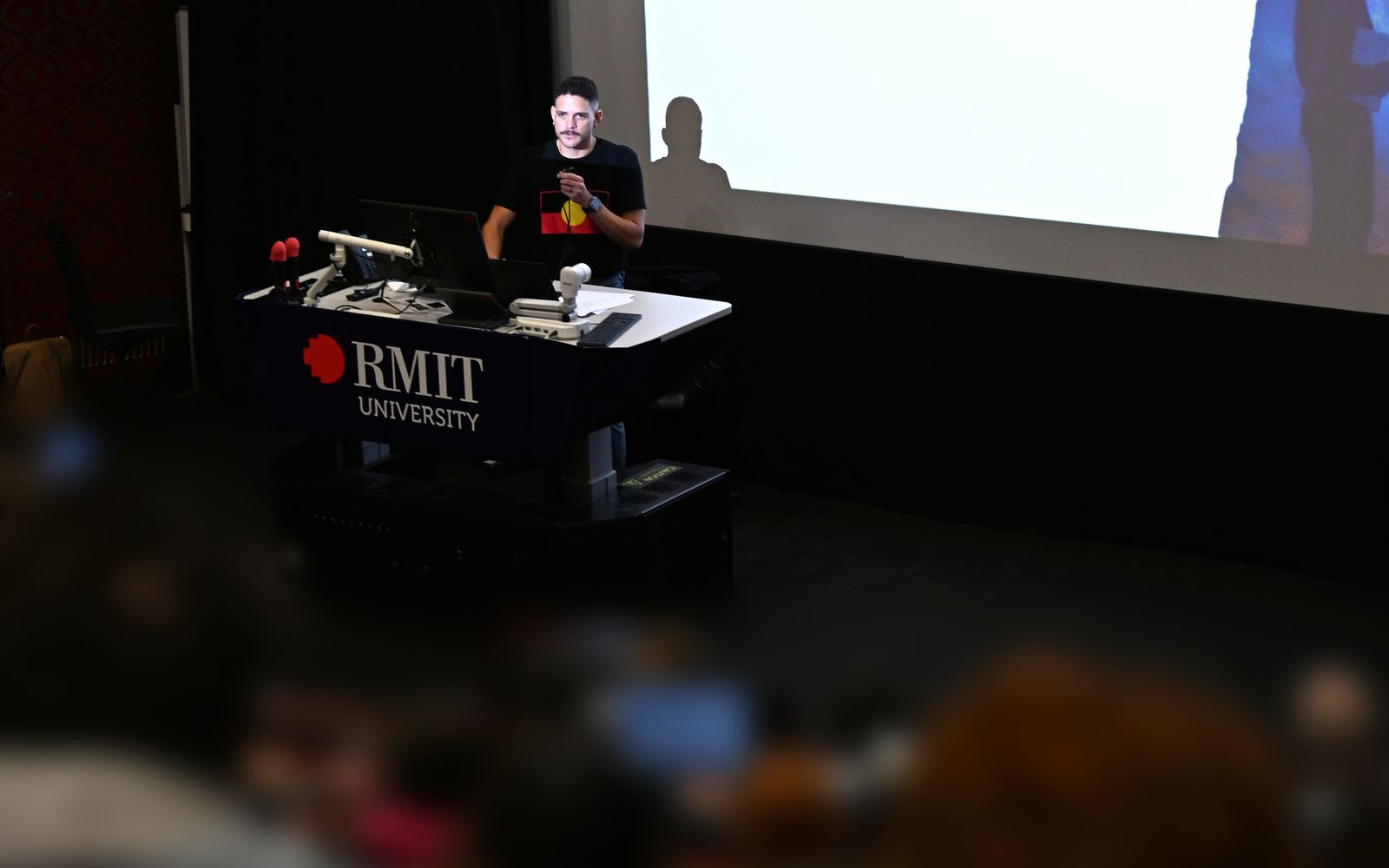
I grew up in rural Queensland. I've spent more than ten years inside the systems that shape our lives: seven years in the public sector, teaching at university, and now building a business.
In 2025 I walked away from government to build Koaching the Gap from nothing. I'm a certified organisational coach, a community director and a board member, and I'm studying law. I work from lived experience, with a focus on better wellbeing and a goal of collective prosperity.
The rest is on LinkedIn.

Rhiannon Busch
Business development and photography
(Tagalaka and Taepathiggi)
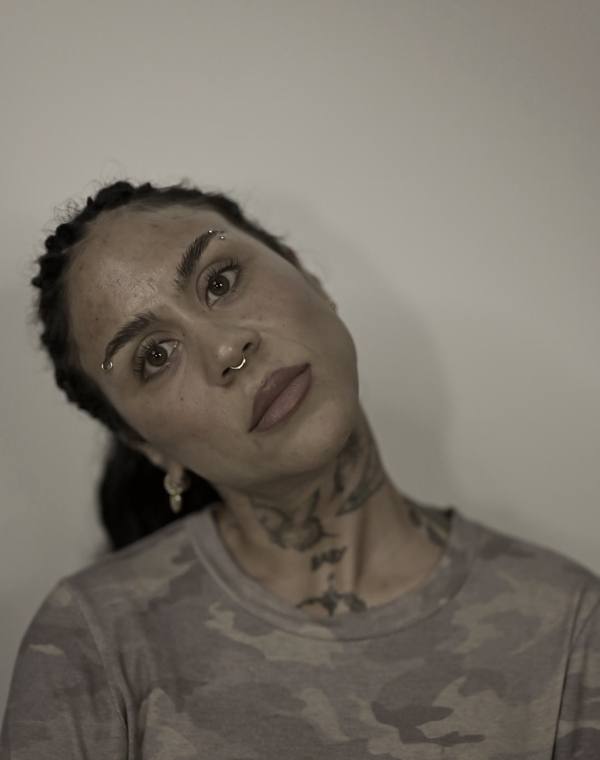
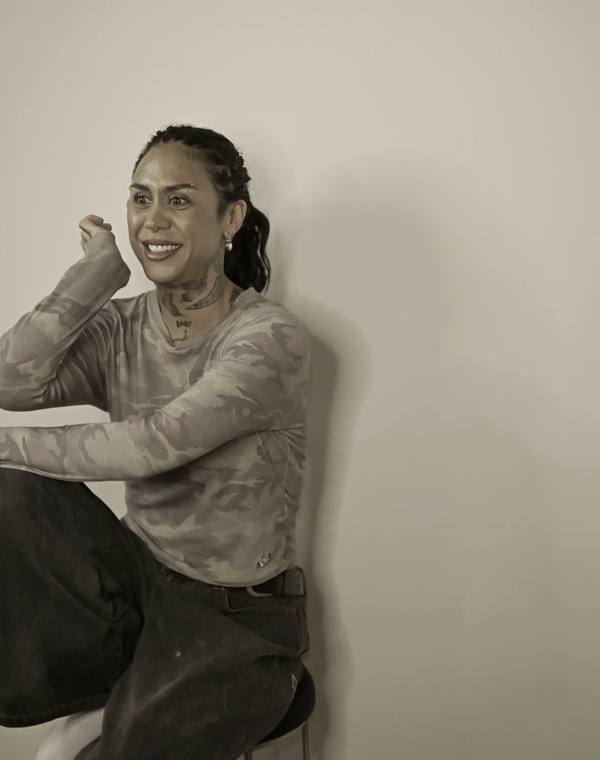
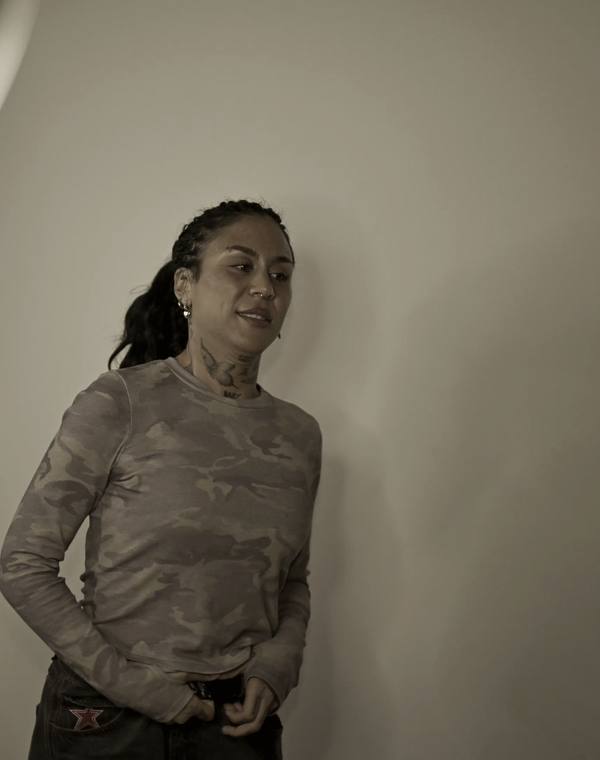
Rhi brings the operations lens: pipeline, relationships and the systems that keep the work moving. She's also behind the camera for Real People, Real Stories.
More about Rhiannon
Rhi photographs as SmilebyRhi, and the photos of Ted on this site are hers. She comes from a consulting background and works alongside Ted on business development, client relationships and the operating systems behind Koaching the Gap.
Together they make Real People, Real Stories: everyday Mob telling their own stories, in their own words.
Koaching the Gap works on a subcontractor model. The Principal leads the practice. The work is delivered by experienced practitioners who contract to Koaching the Gap for each engagement and are matched to what you need. Everyone who works under our name works to our terms, and if someone else would suit you better, we may point you to them.
In their words
Having had the privilege of working with Ted well before this venture was even conceived, I've seen firsthand his unwavering commitment to his identity, to our Mob, and to the people he serves. Ted is someone who carries himself with great dignity and integrity, and his genuine dedication to uplifting others is inspiring. If you have the opportunity to work with him, I strongly encourage you to take it. Ted has an exceptional ability to connect with people, evoke both reflection and emotion, and provide the kind of accountability that drives real growth.
Ted changes lives through an authentic combination of humour, curiosity and humility. Ted draws on his lived and living experiences, and learned knowledges, wasting no time to deliver deep insights, hard truths, and transformative perspectives. If you or your organisation are grappling with some complex, thorny issues, I couldn't recommend Ted highly enough.
Ted has been an exceptional mentor who helped me build confidence in my leadership skills and navigate challenging workplace relationships. His guidance extended beyond day-to-day advice: he encouraged me to explore different career pathways and embrace new opportunities. Ted exemplifies courage, integrity, perseverance, and passion, and through his mentorship, I learned to embody these qualities myself. One of the most significant impacts of his support was giving me the courage to leave a role where I excelled but faced an unsupportive environment and instead take on a new challenge in a different organisation and subject area. I am deeply grateful for Ted's wisdom and encouragement, which have been instrumental in my professional growth.
Start with a yarn
No need to have it all worked out. Tell us roughly what's going on. The first conversation is a short scoping yarn, at no cost.
A short form, a couple of minutes. It comes straight to us, and opens in Microsoft Forms in a new tab.
Or email hello@koachingthegap.com or call 0417 821 328. We're also on LinkedIn.
Coaching
You bring the question. We ask, listen and reflect it back until the answer is yours, and so is the action. Built for people making hard calls under real scrutiny, and for people stepping into a bigger role than they've held before. Two programs, Foundations and Executive, and the first yarn works out which fits.
Mentoring
Someone senior to think with, over time. Less asking, more telling: what we've seen, which doors are worth walking through, and the unwritten rules of government and community organisations, which turn up in most big workplaces too.
Cultural supervision
Regular, structured time to think about the work, the systems around it and the person doing it. It's intersectional, and it's built to work with cultural load and colonial load. It isn't therapy, counselling, clinical supervision or line management, and it doesn't stand in for Elders or the cultural authority of a particular Country.
Who it's for- Mob in roles where the load is real and the support around it isn't.
- Non-Indigenous people who work and walk alongside us.
- Leaders who need independent, honest feedback.
Other services
Group reflection
Reflective practice in a group. The group thinks through its own cases and the systems around them, out loud, and we facilitate. The thinking stays the group's. A small team, or a circle of up to twenty.
Workshop facilitation
Half day and full day sessions, planned with you and run by us, or co-facilitated with your people. Built from your work and your examples, around the foundations of our practice or whatever your team needs next.
Who it's for- Teams where the cultural load keeps landing on the same person.
- Leadership groups who want to move past awareness and into practice.
- Organisations that want their own people in the room as co-facilitators, so it carries on after we leave.
Other services
Strategic advisory
Advice and bespoke solutions, built on the foundations of our practice.
Advice on strategy, policy and practice, and solutions built for the problem in front of you rather than pulled off a shelf. Most of it starts with something that has stalled, so we start by asking where the power sits: who sets the agenda, who holds the budget, and who can say no and have it stick.
Who it's for- Executives and boards with a strategy, charter or policy that isn't landing.
- Government and organisations building culturally responsive practice, who want it to hold.
- Anyone who needs a paper a board can decide on.
Other services
Talks delivered for a host, built for the room. We pre-brief with your organisers so it fits the day, and we take questions if you want them.
Who it's for- Conferences, all-staff days and leadership programs.
- Universities and professional bodies.
- Hosts who want a room to leave with something to do differently, not just a feeling.
Other services









Real People Real Stories
Coming soon
Storytelling through our lens.
Information Hub
Policies, terms, forms and resources.
Koaching the Gap is a 100% Indigenous owned coaching, advisory and facilitation practice based in Melbourne. The terms we work under, how we look after your information, the statements buyers ask for, and answers to common questions are all here.
Something not right? Raise a concern, or read how we handle it.
Need support now? Lifeline 13 11 14, 13YARN 13 92 76, or 000 in an emergency. More support.
Last updated 30 October 2026
Working with us
Our terms, how we charge, and what happens if plans change.
These pages are read together. If you engage us under a signed contract, a statement of work or a purchase order, and that document conflicts with these pages, the signed document comes first for that engagement.
The pages
- Terms and Conditions: how an engagement starts, fees and invoices, cancellations, intellectual property, cultural material, and the limits of what we do.
- Payment terms: when payment is due, how to pay, payment reminders, late payment, and what to do if an invoice looks wrong.
- Cancellation and Refund Policy: notice periods, what happens if we cancel, and how refunds are paid.
- Non-Medical Disclaimer: what coaching is and is not.
- Client Responsibility Disclaimer: what sits with you.
- Website Terms of Use: using koachingthegap.com.au.
- Definitions and glossary: what the words in our terms mean.
If something is not right
How to raise a concern or complaint sets out the steps, and who to go to above us. You can also use the Raise a concern form. You do not have to call it a complaint.
If you would like any of these pages in another format, ask.
Part of the Information Hub. Questions: hello@koachingthegap.com.
Last updated 30 October 2026
Your information
What we collect, where it's kept, and your rights.
- Privacy Policy: what we collect, why, where it is kept, how long, and how to see, correct or delete it.
- Platforms that may hold your information: what we mean by personal and sensitive information, where each kind is kept, the kinds of platform we use, and what is and is not within our control.
Our position on Indigenous data is in the Indigenous data sovereignty statement.
Part of the Information Hub. Questions: hello@koachingthegap.com.
Last updated 30 October 2026
Forms
Short online forms that come straight to us. Each one opens in Microsoft Forms in a new tab.
| Form | What it is for |
| Start with a yarn | Tell us roughly what's going on. The first conversation is a short scoping yarn, at no cost. |
| Register your interest | A community of practice, becoming a referral partner, connecting your organisation, or updates. What each one means. |
| Request a document | For buyers and procurement teams: a certificate of currency, capability statement, supplier forms and the like. |
| Session feedback | For people we have worked with, after a session. |
| Raise a concern | Something is not right. You do not have to call it a complaint. See how we handle it. |
Agreements, onboarding and consent forms are not listed here. We send them by link when they apply to you.
Part of the Information Hub. Questions: hello@koachingthegap.com.
Last updated 30 October 2026
About us
Common questions, our direction and business details.
- Frequently asked questions: how we work, and what each item in a proposal covers.
- Our direction: where the practice is heading.
Business details
Koaching the Gap is 100% Indigenous owned and trades under Australian Business Number (ABN) 23 573 019 125. It is a Supply Nation Registered Supplier and holds professional indemnity and public liability insurance; a current certificate of currency is available on request through the Request a document form. The Principal is a Certified Organisational Coach with the Institute of Executive Coaching and Leadership (IECL).
Contact
Koaching the Gap
Collingwood, Victoria, Australia
hello@koachingthegap.com
0417 821 328
We work from Melbourne, on Wurundjeri Woi-wurrung Country, with people across Australia, mostly online. We acknowledge Aboriginal and Torres Strait Islander people as the Traditional Custodians of the lands on which we live and work, and pay respect to Elders past and present.
Part of the Information Hub. Questions: hello@koachingthegap.com.
Last updated 30 October 2026
Payment terms
1. Purpose
This page sets out how payment works when you receive a quote or invoice from us. It is read together with our Terms and Conditions (clause 8, Fees, invoices and payment) and our Cancellation and Refund Policy. If your signed contract, statement of work or purchase order says something different, that document comes first. If this page and clause 8 of the Terms and Conditions differ, clause 8 applies. Words with a particular meaning are explained in Definitions and glossary.
2. When payment is due
Invoices are payable within 14 days of the invoice date unless your agreement says otherwise. The due date is shown on each invoice.
3. When we invoice
Some engagements are invoiced in advance, some on a schedule, and some after delivery. Your quote, proposal or agreement says which.
4. How to pay
Each invoice shows how to pay: by bank transfer, or by the online payment option on the invoice. We do not add a surcharge for paying online.
5. Tax
Any tax that applies is shown on the invoice.
6. Prepaid blocks
If you prepay a block of sessions, unused sessions stay valid for 12 months from the invoice date unless we agree something different in writing. The Cancellation and Refund Policy covers cancelling and refunds.
7. Payment reminders
Our accounting software may send payment reminders automatically. They are routine. If you need a different payment arrangement, email accounts@koachingthegap.com before the due date.
8. Late payment
If an invoice is more than 30 days overdue we may pause delivery until it is paid. We do not pause delivery without telling you first.
9. If you think an invoice is wrong
Tell us within 7 days of receiving it and we will sort it out with you. If you dispute a payment with your bank or card provider, please contact us first.
Part of the Information Hub. Questions: hello@koachingthegap.com.
Last updated 13 October 2026
Terms and Conditions
1. Who you are dealing with
These terms are between you and Koaching the Gap, Australian Business Number (ABN) 23 573 019 125. Koaching the Gap is run by Ted Johnston as a sole trader. In these terms, "we", "us" and "our" mean Koaching the Gap, and "you" means the person or organisation that engages us.
Koaching the Gap is moving to a company structure. Clause 21 explains what that means for you.
2. What these terms cover
These terms apply to everything we provide: coaching, mentoring, cultural supervision, advisory work, facilitation, speaking, university teaching, group programs and any written materials or digital content.
They are read together with our Privacy Policy, Cancellation and Refund Policy, Payment terms, Website Terms of Use, Non-Medical Disclaimer and Client Responsibility Disclaimer, and with the page Platforms that may hold your information. Together they are the agreement between you and us.
If you engage us under a signed contract, a statement of work or a purchase order, and that document conflicts with these terms, the signed document comes first for that engagement. If we are working as a subcontractor to another organisation, our agreement with that organisation comes first.
Words with a particular meaning in these terms are explained in Definitions and glossary, which is read with these terms.
3. How an engagement starts
Most engagements start with a conversation about what you need. We then send a written quote or proposal that sets out the work, the fees, the dates and anything else that matters.
You accept in one of three ways:
- confirming in writing (an email is fine)
- signing the proposal
- sending a purchase order
These terms apply from that point. For speaking and teaching, the host's written booking confirmation does the same job.
We do not sell services through an online checkout. Nothing on our website creates an engagement until we have confirmed it with you in writing.
4. What coaching is, and what it is not
We provide coaching, mentoring, cultural supervision, facilitation and strategic guidance to support personal and professional growth.
Coaching is not medical, psychological or therapeutic treatment. It does not replace advice, diagnosis or care from a qualified health practitioner. If you need health support, please get it.
We are not medical or mental health practitioners. We do not diagnose or treat mental health conditions or trauma. The Non-Medical Disclaimer sets this out in full and forms part of these terms.
5. When difficult things come up
Conversations in coaching, mentoring, cultural supervision and group facilitation can bring up hard material: grief, trauma, racism, burnout, and family and community load. That is a normal part of the work, and we make room for it. What we offer is not treatment, and some things are too heavy for this work to carry on its own.
If it becomes evident, or you tell us, that you are carrying more than this work can hold, we talk about it with you first, and the choices stay with you wherever they can. That can mean slowing down, changing the shape of the work, or putting other support alongside it. We refer you to a service when that is the right thing. Sometimes the right thing is to pause our work while that support is in place; clause 15 covers how a pause or an end is handled.
The exceptions are immediate danger to a life, yours or someone else's, and anything the law requires us to disclose. If a life is in immediate danger and it cannot be made safe in conversation, we may contact emergency services or a crisis service. Where it is safe and possible, we involve you in that step; where it is not, we act first. Our Privacy Policy (clause 7) explains when the law allows us to share information without consent in those circumstances.
Support that is available to anyone, any time:
- Lifeline: 13 11 14, 24 hours
- 13YARN: 13 92 76, 24 hours, run by Aboriginal and Torres Strait Islander people
- Emergency: 000
6. What we ask of you
Results depend on your participation, your commitment and your follow-through on what you agree to do. We do not guarantee specific outcomes.
You agree to:
- give us accurate and complete information when we start, and tell us when something material changes
- engage respectfully with us and with other participants
- tell us if anything would make the work unsafe or unsuitable for you
- in group settings, follow reasonable instructions and keep other participants' information confidential
7. Cancellations and rescheduling
Individual sessions. Give us at least 24 hours' notice to cancel or reschedule a session without charge. With less notice, or if you do not attend, the session fee is payable.
Workshops, facilitation days and speaking. Give us at least 10 business days' notice to cancel or move a booked date without charge. With less notice, the fee for the date is payable, less any costs we are able to avoid.
Exceptions. We waive these charges in exceptional circumstances, such as a medical emergency, a technical failure on our side, Sorry Business or cultural obligations, or where the law requires it.
If we cancel. If we cancel or move a session or a date, we offer a new time. If that does not suit you, you choose a credit or a refund of anything you have already paid for it. No cancellation fee applies to you.
The Cancellation and Refund Policy has the full process.
8. Fees, invoices and payment
Fees are set out in your quote, proposal or agreement. Any tax that applies is shown on the invoice.
We invoice through our accounting software. Each invoice, and the email it comes with, refers to these terms. Each invoice shows how to pay: by bank transfer, or by the online payment option on the invoice. We do not add a surcharge for paying online.
When payment is due. Invoices are payable within 14 days of the invoice date unless your agreement says otherwise. Some engagements are invoiced in advance, some on a schedule, and some after delivery. Your quote, proposal or agreement says which.
Prepaid blocks. If you prepay a block of sessions, unused sessions stay valid for 12 months from the invoice date unless we agree something different in writing.
Late payment. If an invoice is more than 30 days overdue we may pause delivery until it is paid. We do not pause delivery without telling you first.
Disputed invoices. If you think an invoice is wrong, tell us within 7 days of receiving it and we will sort it out with you. If you dispute a payment with your bank or card provider, please contact us first.
Payment terms. The Payment terms page sets out how payment works in one place. If it and this clause differ, this clause applies.
9. Refunds and consumer guarantees
Refunds are handled under our Cancellation and Refund Policy and the Australian Consumer Law (ACL), which is Schedule 2 of the Competition and Consumer Act 2010 (Cth).
Nothing in these terms limits the rights you cannot sign away under the ACL, including that our services are provided with due care and skill, are fit for the purpose you told us about, and are delivered within a reasonable time.
10. Intellectual property
Our content, materials, tools, frameworks, methods and resources (including branding, session materials, workbooks, slides and digital content) stay our property or the property of our licensors.
You have a limited, non-transferable, non-exclusive licence to use those materials for your own personal or internal organisational development. Copying, distributing, adapting, translating, publicly displaying, selling or building on them needs our written consent.
Your material. What you bring to an engagement stays yours. Where we produce a report, a framework or a deliverable for you under a written contract, that contract says who owns it. Without a written contract, we keep ownership and you have the licence above.
Cultural material. Aboriginal and Torres Strait Islander cultural knowledge, practices and material carrying cultural authority are excluded from any licence under these terms. They are not transferred, licensed, reused or commercialised, and they stay with the people and communities who hold them.
Welcome to Country is not something we provide or arrange. It is given by an Elder or Traditional Owner of the Country you are on, and the right people to approach are that Country's Traditional Owner organisation. If you ask, we may point you to them or to an Elder directly, at no charge. Any arrangement and any fee is between you and them.
11. Privacy and your information
We handle personal information under our Privacy Policy and the Australian Privacy Principles (APPs) in the Privacy Act 1988 (Cth).
The page Platforms that may hold your information sets out what we mean by personal and sensitive information, where each kind is kept, the kinds of platform we use, and the countries where they hold information. Ask us and we tell you which platforms hold your information.
12. Technology and artificial intelligence (AI)
We run the practice on standard business software, including Microsoft 365, a practice management workspace and accounting software, and we use AI assistants for administration, drafting, research and our own note-taking.
Our rules:
- we do not record a session unless we have both agreed it in writing beforehand (clause 14)
- we keep cultural material out of the AI tools we use
- we do not use AI tools to make decisions about you
- where an AI tool helps us draft or summarise something, a person reviews it before it is relied on or sent
If we get one of these wrong, we tell you, fix it, and change what let it happen.
The kinds of AI tool we use, and where they hold information, are on the page Platforms that may hold your information.
13. Group work, programs and conduct
These terms apply to individual work, group work, facilitation, speaking and programs.
Participants follow reasonable instructions, treat others with respect, and keep other participants' information confidential.
If a participant's conduct is abusive, discriminatory or materially disrupts a program for others, we may remove them. No refund applies in that case, except where the law requires one.
14. Recording, testimonials and marketing
One rule for recording. A session is not recorded unless we have both agreed to it in writing beforehand, for a stated purpose. Either of us can ask; both of us have to agree, and in a group one no means no recording. Where we have agreed to record, recording starts when the business part of the session begins, so what is personal or sensitive in the opening minutes stays off the record, and once recording has started we check that you are still happy. You can withdraw your agreement at any time, and it changes nothing about our work. The written agreement says what the recording is for, where it is kept and when it is deleted. Our voice recorder is for our own notes and is switched off in sessions, meetings and yarns with you.
You do not record a session without our written agreement either.
If you give us a testimonial, you allow us to use it to promote our services, subject to our Privacy Policy. You can withdraw that permission at any time by contacting us, and we will remove it from material we control within a reasonable time.
You can opt out of marketing messages at any time using the unsubscribe link or by contacting us.
15. Declining, pausing or ending an engagement
We may decline, pause or end an engagement where:
- there is an actual or perceived conflict of interest
- the work falls outside our expertise, or outside what coaching can properly address
- conduct towards us or other participants is abusive, discriminatory or unsafe
- fees remain unpaid after reasonable notice
- continuing would compromise our professional or cultural obligations
If we end an engagement for a reason that is not your fault, we refund anything prepaid for sessions not yet delivered. If we end it because of unpaid fees or conduct, no refund is payable except where the law requires one.
You may end an engagement at any time by telling us in writing. Sessions already delivered are payable. Clause 7 and the Cancellation and Refund Policy cover sessions not yet delivered.
16. Things outside our control
Neither of us is liable for failure or delay caused by something reasonably outside our control, including natural disaster, fire, flood, pandemic, government direction, industrial action, failure of telecommunications or power, or Sorry Business and cultural obligations.
If that happens, we offer a new date or a credit as soon as we can. If the delay goes on for more than 60 days, either of us may end the engagement, and we will refund anything prepaid for sessions not yet delivered.
17. Limitation of liability
To the extent the law allows, we are not liable for indirect or consequential loss, loss of data, loss of profit or loss of business opportunity arising from our services or from reliance on coaching guidance.
Where our liability under the Australian Consumer Law can be limited but not excluded, our liability for a failure to meet a consumer guarantee is limited, at our option, to supplying the services again or paying the cost of having them supplied again.
To the extent the law allows, our total liability in connection with an engagement is limited to the fees you paid for that engagement.
You agree to cover us for claims, costs and losses that arise from your breach of these terms or misuse of our services.
Nothing in this clause excludes or restricts any consumer guarantee, right or remedy under the Australian Consumer Law that cannot be excluded.
18. No reliance by third parties
Our services, advice, materials and deliverables are for you, for the purpose set out in the engagement. They are not to be relied on by anyone else, and we accept no liability to a third party who obtains or relies on them. If you want to share a deliverable outside your organisation, ask us first.
19. Complaints and disputes
If something is not right, tell us. Email hello@koachingthegap.com. We acknowledge a complaint within 5 business days and aim to resolve it, or give you a clear plan in writing, within 20 business days. How to raise a concern or complaint explains the steps, including who to go to if you would rather not deal with us directly or are not satisfied with our response.
If we cannot resolve a dispute between us, both of us agree to try in good faith, including mediation where appropriate, before starting court proceedings. This does not stop either of us seeking urgent court orders.
For a privacy complaint that is not resolved to your satisfaction, you can contact the Office of the Australian Information Commissioner (OAIC) at oaic.gov.au or on 1300 363 992.
20. People under 18
Our services are for adults. We do not engage directly with people under 18.
Where we teach or facilitate in a university, school or program setting that includes people under 18, the institution arranges that work under its own consent, supervision and child safety arrangements, and those arrangements apply.
If we learn that we hold personal information about a child without the consent of a parent or guardian, we delete it, consistent with our Privacy Policy and the APPs.
21. Change of business structure
Koaching the Gap is moving from a sole trader to a proprietary limited company.
When that happens, we will give you notice, and your engagement will continue with the company on the same terms, with the same people and the same obligations to you. Your rights are not reduced by the change. If you do not want your engagement to transfer, tell us within 14 days of the notice and you may end it without penalty, paying only for work already delivered.
We will publish the company's name and Australian Company Number (ACN) on this site when the change is complete.
22. Changes to these terms
We may update these terms. The 'Last updated' date at the bottom of the page shows the current version. Where a change is material, we email current clients where we can.
The version that applies to an engagement is the version in force on the day you accepted the quote, proposal or booking.
23. General
Severability. If any part of these terms is invalid or unenforceable, that part is removed and the rest still applies.
Waiver. If we do not enforce a right under these terms, we have not given it up.
Entire agreement. These terms, the policies they refer to, and any signed contract are the whole agreement between us and replace any earlier understanding.
Notices. Notices to us go to hello@koachingthegap.com. Notices to you go to the email address you gave us.
24. Governing law
These terms are governed by the laws of Victoria, Australia. Disputes are resolved in the courts of Victoria, unless we agree otherwise in writing.
Part of the Information Hub. Questions: hello@koachingthegap.com.
Last updated 13 October 2026
Cancellation and Refund Policy
1. How this policy fits
This policy is read together with our Terms and Conditions. Together with the other policies listed there, it is the agreement between you and Koaching the Gap. If your signed contract, statement of work or purchase order says something different, that document comes first. Words with a particular meaning are explained in Definitions and glossary.
2. Your rights under the Australian Consumer Law
Nothing in this policy limits the rights you cannot sign away under the Australian Consumer Law (ACL).
If our services fail to meet a consumer guarantee, including that they be provided with due care and skill, be fit for the purpose you told us about, and be delivered within a reasonable time, you are entitled to a remedy. Depending on the failure, that may be:
- the work done again
- a refund
- cancelling the engagement
We will not mislead you about these rights, and nothing in this policy is meant to.
3. Cancelling or moving a session
Give us at least 24 hours' notice to cancel or reschedule an individual session without charge.
With less than 24 hours' notice, or if you do not attend, the session fee is payable. If the session was prepaid, it is used. If it is yet to be invoiced, it is invoiced.
4. Cancelling or moving a workshop, facilitation day or speaking date
Give us at least 10 business days' notice to cancel or move a booked date without charge.
With less notice, the fee for the date is payable, less any costs we are able to avoid (for example travel we can cancel). We will show you what we have deducted.
5. Exceptional circumstances
We waive cancellation charges where the cancellation is caused by:
- a medical emergency
- a technical failure on our side
- Sorry Business or cultural obligations
- anything else where the law requires it
Tell us what has happened and we will work it out with you.
6. If we cancel
If we cancel or move a session or a date, we offer a new time. If that does not suit you, you choose a credit towards future work or a refund of anything you have already paid for it. No cancellation fee applies to you.
7. Ending an engagement early
You may end an engagement at any time by telling us in writing. Work already delivered is payable.
If you have prepaid a block of sessions and end early, we refund the unused sessions. Where the block was sold at a discount, the sessions already delivered are charged at the single-session rate before the refund is worked out, which may mean the discount no longer applies.
Where an engagement is priced as a whole program over a set period and invoiced on a schedule, your agreement says what happens if it ends early. If the agreement is silent, the rules above apply.
8. Prepaid blocks and packages
Unused sessions in a prepaid block stay valid for 12 months from the invoice date, unless we agree something different in writing. Individual sessions in a block can be rescheduled under clause 3. Expiry does not override your rights under the ACL.
9. How to ask for a refund or raise a concern
Email hello@koachingthegap.com and include:
- your name, and your organisation if relevant
- the session or invoice it relates to
- what you are asking for
Ask about a session within 7 days of the session date, and about an invoice within 7 days of receiving it, so we can look at it while the details are fresh. A late request is still considered.
10. How we assess and pay a refund
We look at each request fairly, on the circumstances and any supporting information.
If a refund is approved, we pay it to the account or card it came from within 14 business days. Where a payment provider was involved, its own processing times also apply.
11. What is not refundable
- Completed sessions and delivered work, unless the law requires a refund or we have agreed one in writing
- Digital products, downloads or resources once accessed or delivered
- Fees for a program you were removed from for conduct reasons under the Terms and Conditions, clause 13
Nothing in this clause limits your rights under the ACL.
12. Chargebacks
If you are unhappy, please contact us before disputing a payment with your bank or card provider. Most things are quicker to fix directly.
13. Changes to this policy
We may update this policy. The 'Last updated' date at the bottom of the page shows the current version. The version that applies to an engagement is the version in force on the day you accepted the quote, proposal or booking.
Part of the Information Hub. Questions: hello@koachingthegap.com.
Last updated 5 October 2026
Privacy Policy
1. How this policy fits
This policy is read together with our Terms and Conditions, Website Terms of Use and Cancellation and Refund Policy, and with the page Platforms that may hold your information.
Words with a particular meaning are explained in Definitions and glossary.
2. Our commitment, and the law behind it
We handle personal information in line with the Australian Privacy Principles (APPs) in the Privacy Act 1988 (Cth). The Privacy Act does not require every small business to follow the APPs. We follow them regardless, because the people we work with share things that matter.
Koaching the Gap, Australian Business Number (ABN) 23 573 019 125, is responsible for the personal information described in this policy.
How we keep these promises. What follows are our working rules, and we set our tools up to match them. We are a small practice, and if we get one of them wrong we tell the person affected, fix it, and change whatever let it happen. Where a promise depends on how a platform is set up, the page Platforms that may hold your information says so.
3. What we collect and why
We collect personal information to deliver our services, stay in contact, invoice and get paid, meet our legal obligations and improve what we do.
- Name, email, phone, organisation and role. To identify you, arrange sessions and stay in contact.
- Scheduling details. To run sessions and meetings.
- Invoicing details. To invoice your organisation or you, and to keep the records tax law requires.
- Intake information. What you tell us at the start about what you want from the work, and anything that would make it unsafe or unsuitable.
- Notes about our work together. Brief working notes so there is continuity across an engagement.
- What you choose to share in sessions. To do the work you engaged us for.
- Enquiry and registration details. What you give us through a contact form, an expression of interest or an email.
- Testimonials. Only what you give us for that purpose.
- Website visit data. Your IP address and basic details about your browser, which our website host receives when you visit. Clause 12 explains how.
We may also use information for closely related purposes you would reasonably expect, such as contacting you about a program you attended. We do not collect more than we need.
4. How we collect it
Mostly from you directly: through email, phone, our booking page, our online forms, expressions of interest and sessions.
Where an organisation engages us to work with one of its people, we receive some information from the organisation, usually your name, role and contact details and the purpose of the work. Before the work starts we meet you, explain what the organisation will and will not hear back from us, and you can decline to take part.
5. Dealing with us anonymously
You can make a general enquiry without giving your name, or using a name that is not your own. For a coaching or supervision engagement, that is not practical, because the work is about you.
6. Sensitive information
Under the Privacy Act, sensitive information includes health information and information about racial or ethnic origin, religious beliefs, sexual orientation and criminal record.
We collect sensitive information only with your consent, or where the law allows. We use it only for the purpose it was collected for, or a directly related purpose with your consent.
Aboriginal and Torres Strait Islander information. Information about your Aboriginal or Torres Strait Islander identity, your community or Country, and any cultural knowledge you share with us is sensitive information and is treated that way.
Cultural knowledge and material carrying cultural authority stays with the people and communities who hold it. Our rules:
- we do not use it for marketing
- we do not share it without your express consent
- we keep it out of the artificial intelligence (AI) tools we use
If it ends up somewhere it should not be, we tell you, remove it, and record what happened.
Where you are from and your Mob. When you register your interest with us, we ask where you are from and who your Mob is. You do not have to answer. Many people choose to: it is customary to name where you are from and who your Mob is, and it helps us match people well. It is sensitive information, so we collect it only with your consent, and answering the question is how you give it. It is kept in our Microsoft 365 workspace in Australia, not in our practice management workspace, is used only to match referrals well, and you can ask us to remove it at any time.
Where sensitive information is kept. Sensitive information, intake information and session notes are kept in our Microsoft 365 workspace, which stores data in Australia. They are not kept in our practice management workspace, which is held in the United States. The page Platforms that may hold your information explains where each kind of information is kept.
Health information. We are not a health service and we do not keep health records. If you tell us something about your health during our work together, we treat it as sensitive information, keep it only as long as it is needed for the engagement and our legal obligations, then delete or de-identify it. Because we are in Victoria, the Health Records Act 2001 (Vic) also applies to any health information we hold, and the Health Complaints Commissioner handles complaints about it (clause 18).
7. How we use and share it
We use and disclose personal information for the purposes it was collected for and for closely related purposes you would reasonably expect (APP 6). We ask for your consent before using it for anything else, unless the law permits or requires the use.
Sponsored engagements. Where an organisation pays for your coaching or supervision, the organisation does not hear the content of your sessions. Before we start, the three of us agree in writing what the organisation hears back, which is usually attendance and themes at a general level. That agreement governs.
Safety. We may disclose personal information without consent where the APPs permit or require it, including where we reasonably believe it is necessary to lessen or prevent a serious threat to the life, health or safety of a person, or where the law requires disclosure.
People who help us deliver. Where we introduce an associate or subcontractor to deliver part of an engagement, we name them to you, and they are bound by confidentiality and by this policy.
We do not sell personal information.
8. The platforms that may hold your information
We run the practice on third-party platforms. The page Platforms that may hold your information sets out what we mean by personal and sensitive information, where each kind is kept, the kinds of platform we use, and the countries where they hold information.
When a kind of platform or a country changes, we change that page, and we keep a list of every platform by name. Ask us and we tell you which platforms hold your information. An organisation that engages us can have the full list, in confidence, as part of its due diligence.
9. Overseas storage
Some of these platforms store or process information outside Australia, mainly in the United States. Platforms that may hold your information shows which kinds of platform and which countries. Our Microsoft 365 workspace, where sensitive information and session notes are kept, stores data in Australia.
Where we use a platform that holds personal information overseas, we take reasonable steps so that it is handled in a way consistent with the APPs: we choose established providers, use their business terms, and limit what we store there (APP 8).
10. Artificial intelligence (AI)
We use AI assistants for administration, drafting, research and our own note-taking, through our own business accounts. The kinds of tool, and where they hold information, are on Platforms that may hold your information.
Our rules:
- we do not use AI tools, or any computer program, to make decisions about you
- we keep cultural material out of the AI tools we use
- we do not record a session unless we have both agreed it in writing beforehand; our Terms and Conditions, clause 14, set out the rule, including that recording starts only when the business part of a session begins
- where an AI tool helps us draft or summarise something, a person reviews it before it is relied on or sent
11. Marketing messages
We send marketing messages only to people who have agreed to receive them, or who would reasonably expect them from an existing relationship. Every message says who it is from and how to unsubscribe. We act on an unsubscribe within 5 business days and do not ask you to explain (APP 7). We do not use sensitive information for marketing.
12. Cookies and website analytics
Cookies are small files a website stores in your browser.
Our website is koachingthegap.com.au. We do not use cookies, analytics or advertising tools on it, and it has no contact form.
- Website host. Our website host, Cloudflare, receives your IP address and basic details about your browser when you visit, so it can deliver the pages and keep the site secure. It may set a security cookie to tell people apart from automated bots.
- Fonts. Our fonts are stored on our own website, so no other company is contacted when a page loads.
- Forms. Our forms are Microsoft Forms, in our Microsoft 365 workspace. If you open one, Microsoft's own cookies and privacy statement apply to that page.
What we do and do not do. We do not use any of this to build advertising profiles, and we do not sell information about visits to our website.
13. Security
We take reasonable steps to protect personal information from misuse, interference, loss and unauthorised access, modification or disclosure (APP 11). The steps include:
- multi-factor authentication on our business accounts
- access limited to the people who need it
- encryption in transit and at rest provided by our platforms
- a classification applied to information before any work starts, which keeps client information inside our own business accounts
- AI assistants that work only through our own business accounts, under the Principal's login and on the Principal's instruction. They are connected to our Microsoft 365 workspace and our practice management workspace and can read and edit business files there. Our rules do not allow them to open client session records or cultural material. Anything they remove goes to a recycle bin first, so it can be restored
- a written protocol for what any automated tool may and may not do
No system is completely secure. We cannot guarantee absolute security, and information sent to us over the internet carries some risk in transit.
14. Data breaches
If we become aware of a data breach that is likely to result in serious harm to anyone whose information we hold, we assess it and, where the Privacy Act requires, notify the people affected and the Office of the Australian Information Commissioner under the Notifiable Data Breaches scheme. This applies whether the breach happens in our own systems or at a platform we use.
15. How long we keep it
We keep personal information only as long as we need it for the purposes in this policy, or as long as the law requires.
- Financial and invoicing records: 7 years. Tax law requires 5 years for a sole trader and company law requires 7 years for a company, so we keep 7 so that the rule does not change when we become a company.
- Engagement records, including intake information and working notes: 7 years from the end of the engagement.
- Enquiries that do not lead to an engagement: 12 months.
- Marketing contacts: until you unsubscribe.
- Website visit data: our website host keeps its logs on its own schedule.
When information is no longer needed, we delete or de-identify it (APP 11.2).
16. Access, correction and deletion
You can ask to see the personal information we hold about you, and ask us to correct it if it is wrong, incomplete or out of date (APPs 12 and 13). Email hello@koachingthegap.com. We may need to confirm your identity first. We respond within 30 days, and we do not charge for a request.
We may refuse access where the law allows, for example where giving it would unreasonably affect someone else's privacy. If we refuse, we tell you why in writing and how to complain.
Deletion. Australian privacy law does not give you a general right to have information deleted. We offer it anyway. If you ask us to delete what we hold about you, we delete or de-identify it within 30 days, except what the law requires us to keep (mainly financial records). We tell you what we have kept and why.
What deletion means in our systems. When we delete a record, our platforms first move it to a recycle bin or trash, so a mistake can be undone. The platform then removes it permanently on its own schedule (30 days in our practice management workspace), or sooner if we empty the trash ourselves. The platforms also keep their own backup copies for a limited time after that, on the schedules they publish. Ask us and we send you the links.
To make a request, copy this into an email and fill in the blanks:
To: hello@koachingthegap.com
Subject: Privacy request

My name:
My organisation (if relevant):
I am asking for (access / correction / deletion):
What it relates to (for example, a session, an invoice, an enquiry):
Anything else you need to know:
17. Children
Our services are for adults. If we learn that we hold personal information about a person under 18 without the consent of a parent or guardian, we delete it.
18. Questions and complaints
For privacy questions or complaints, email hello@koachingthegap.com. We acknowledge a complaint within 5 business days and aim to resolve it within 30 days. How to raise a concern or complaint explains the steps.
If you are not satisfied with our response, you can complain to the Office of the Australian Information Commissioner (OAIC): oaic.gov.au/privacy/privacy-complaints, phone 1300 363 992. If your complaint is about health information and you are in Victoria, you can also contact the Health Complaints Commissioner: hcc.vic.gov.au, phone 1300 582 113.
19. Updates to this policy
We may update this policy. The 'Last updated' date at the bottom of the page shows the current version. Where a change is significant, we tell current clients by email where we can.
Part of the Information Hub. Questions: hello@koachingthegap.com.
Last updated 27 October 2026
Platforms that may hold your information
We run the practice on a small number of third-party platforms. This page says what we mean by personal and sensitive information, where each kind is kept, and which kinds of platform may hold it. Not every platform holds information about every person, which is why this page says "may".
Our Privacy Policy points here, so when a kind of platform or a country changes we update this page rather than rewrite the policy. The table below defines the privacy terms; every other word we use is in Definitions and glossary.
What we mean
| Term | What it means | Examples in our work |
| Personal information | Information or an opinion about a person who is identified, or who can reasonably be identified. This is the meaning in the Privacy Act 1988 (Cth), section 6 | Your name, email, phone number, organisation and role. Booking and invoice details |
| Sensitive information | Personal information the Privacy Act gives extra protection. It covers racial or ethnic origin, political opinions, religious or philosophical beliefs, membership of a professional body or union, sexual orientation or practices, criminal record, health information, and genetic or biometric information | Your Aboriginal or Torres Strait Islander identity. Something you tell us about your health |
| Health information | Information or an opinion about a person's health, including an illness, disability or injury | Something about your health or wellbeing that comes up in our work together |
| Cultural information | Our own term. Your community, your Country, and any cultural knowledge you share with us. We treat it as sensitive information whether or not the law does | A story, a protocol or a family connection you share in a session |
| Session content | Our own term. What is said in a coaching, mentoring or cultural supervision session, and our notes about it. We treat it as sensitive information | What you talk through in a session. Our brief working notes |
| Platform | An online service run by another company that we use to run the practice | Email, a booking page, accounting software |
Where each kind of information is kept
| Kind of information | Where it is kept | Country |
| Sensitive information, health information, cultural information, intake information and session content | Our Microsoft 365 workspace. Not in our practice management workspace | Australia |
| Contact and scheduling details | Our Microsoft 365 workspace (email, calendar, bookings) and our practice management workspace | Australia and the United States |
| Invoice and payment details | Our accounting platform and, if you pay online, its payment provider. We do not see your full card details | Australia, New Zealand and the United States |
| Enquiries and expressions of interest | Our email, our online forms (Microsoft Forms, in our Microsoft 365 workspace) and a registration list in our practice management workspace | Australia and the United States |
| A recording or transcript of a session, only where we have both agreed it in writing beforehand | Our Microsoft 365 workspace | Australia |
| A message you send us on a social platform | That platform | See that platform's privacy policy |
The kinds of platform we use
| Kind of platform | What we use it for | What it may hold about you | Where the provider holds it |
| Email, calendar, online meetings, bookings, documents and records (Microsoft 365) | Running engagements and keeping records | What you send us and what we record about our work with you. This is the home for anything sensitive | Australia |
| Practice management workspace | Contacts, scheduling, projects and our own business planning notes | Your name, organisation, role and contact details, and the dates and length of sessions. Not sensitive information, intake information or session content. | The United States |
| Accounting and invoicing | Invoices and the records tax law requires | The name, organisation and contact details on an invoice | Australia, New Zealand and the United States |
| Online payments | Taking a payment if you use the online pay option on an invoice | Your payment details. We do not see your full card details | Australia and the United States |
| Website host (Cloudflare) | Running our website and keeping it secure | Your IP address and basic details about your browser when you visit. A security cookie, if one is needed to tell people apart from automated bots | The United States and other countries where Cloudflare runs its network |
| Artificial intelligence (AI) assistants | Drafting, research and administration, through our own accounts. They connect to our Microsoft 365 workspace and our practice management workspace and act on the Principal's instruction. They are not used to make decisions about you, and we keep cultural material and session content out of them | Text from the documents, emails and notes we ask them to help with. That can include personal information | Australia and the United States |
| Voice recording and dictation | Our own spoken notes and dictation. The recorder is switched off in sessions, meetings and yarns with you | Our dictated notes, which can mention you | The United States. One provider also lists data centres in other regions |
| Professional networking | Our professional profile | A message, if you send us one there | See that platform's privacy policy |
Asking which platforms hold your information
We keep a current list of every platform by name, with where each provider holds data and a link to its privacy page.
- If you are a person we hold information about: email hello@koachingthegap.com and we tell you which platforms hold your information and what is on each.
- If you are an organisation that engages us, or that we deliver for as a subcontractor: you can have the full list as part of your due diligence. We give it in confidence under the engagement agreement.
Online meetings on your platform
Most sessions run on Microsoft Teams from our account. Teams meeting recordings and transcripts are stored in our Microsoft 365 workspace in Australia. We record only where we have both agreed it in writing beforehand, and recording starts when the business part of the session begins.
If your organisation hosts the meeting on its own platform (Teams, Zoom, Webex or another), that platform and your organisation's settings decide where the meeting data is stored and how long it is kept. We cannot control that. We do not use a new meeting platform with you without telling you first.
What is in our control and what is not
In our control.
- Which platforms we use.
- How each is set up: who has access, multi-factor authentication, and the region where the provider offers a choice.
- What we store on each platform, what we keep out of it, and when we delete it.
Not in our control.
- The provider's own infrastructure, its subcontractors and its outages.
- How long the provider keeps its own copies and backups after we delete something.
- A breach of the provider's own systems.
What stays our responsibility either way. Choosing providers with care and setting them up properly. If a platform we use is breached, we are still responsible for assessing what it means for your information, and for telling you and the Office of the Australian Information Commissioner where the Privacy Act 1988 (Cth) requires it. We do not disclaim that.
Access and deletion
You can ask to see what we hold about you, ask us to correct it, or ask us to delete it. Email hello@koachingthegap.com. Our Privacy Policy, clause 16, explains how long we take, what the law requires us to keep, and has an email template you can copy.
When we delete a record from our practice management workspace, it goes to the workspace's trash and is permanently removed after 30 days, or sooner if we empty the trash ourselves. Microsoft 365 and the other platforms keep their own backup copies for a limited time after a deletion, on the schedules they publish. Ask us and we send you the links.
Part of the Information Hub. Questions: hello@koachingthegap.com.
Last updated 27 October 2026
Website Terms of Use
1. Agreement to these terms
These Website Terms of Use cover your use of the Koaching the Gap website at koachingthegap.com.au, including these information pages (the "Site").
By using the Site you agree to these terms. Our Terms and Conditions govern any services we provide; nothing on the Site creates an engagement until we confirm it with you in writing. Words with a particular meaning are explained in Definitions and glossary.
2. Using the Site
The Site is here so you can learn about our services and get in touch. You may view, download and print pages for that purpose, and for your own or your organisation's internal reference.
You must not:
- use the Site unlawfully, or in a way that harms Koaching the Gap or interferes with other people's access
- try to gain unauthorised access to any part of the Site or any system connected to it
- resell, republish or commercially exploit Site content without our written consent
- use automated means to scrape, harvest or extract content from the Site, including to train or fine-tune machine learning or artificial intelligence (AI) models, without our written consent
3. Intellectual property
All content, branding, graphics and materials on the Site belong to Koaching the Gap or its licensors.
You may view, download and print them as clause 2 above allows. How cultural material is treated is set out in the Terms and Conditions, clause 10. Do not reproduce, distribute, adapt, translate, publicly display or build on Site content without our written permission.
4. What you send us through the Site
If you submit content through a form on the Site, you give us a non-exclusive, royalty-free licence to use it to respond to you and to provide our services. You confirm you have the right to send it and that it does not infringe anyone else's rights.
Please do not send confidential or sensitive information through a Site form. Use email, or wait until we have spoken.
5. Privacy
Our Privacy Policy explains how we collect, use and protect personal information, and the page Platforms that may hold your information lists where it is held.
6. Security
We take reasonable steps to protect the Site and the information sent through it, including encryption in transit and restricted access. No website is completely secure.
7. Disclaimers
The Site is for general information. Nothing on it is medical, psychological, legal, financial or therapeutic advice.
We take care with the content, but we do not promise it is complete, current or free of errors, or that the Site will always be available. We may change, suspend or withdraw any part of the Site at any time.
8. Limitation of liability
To the extent the law allows, we are not liable for loss arising from your use of the Site or reliance on its content. Nothing in these terms excludes or restricts rights under the Australian Consumer Law that cannot be excluded.
9. Links to other sites
The Site links to other websites. We are not responsible for the content or privacy practices of those sites.
10. Changes to these terms
We may update these terms. The 'Last updated' date at the bottom of the page shows the current version.
11. Governing law
These terms are governed by the laws of Victoria, Australia. Disputes are resolved in the courts of Victoria.
12. Contact
Questions about these terms: hello@koachingthegap.com.
Part of the Information Hub. Questions: hello@koachingthegap.com.
Last updated 27 October 2026
Non-Medical Disclaimer
When you engage Koaching the Gap, you acknowledge and agree that:
- Koaching the Gap provides coaching, mentoring, cultural supervision and advisory services that support personal and professional growth, reflection and the way you work.
- Our services are not a substitute for mental health care, counselling, psychotherapy or medical treatment.
- We are not medical or mental health practitioners. We do not diagnose, treat or provide therapy for mental health conditions or trauma.
- Nothing we say or write is medical, psychological or therapeutic advice.
- Coaching may touch on difficult material, including experiences of trauma. That does not make it therapy, and it is not delivered as therapy.
- If you are experiencing psychological distress, mental illness or the effects of trauma, we encourage you to seek support from an appropriately qualified health professional. Where a life is in immediate danger, yours or someone else's, or where the law requires it, we may share information about you without your consent. Otherwise we share your information only as our Privacy Policy describes. The Terms and Conditions, clause 5, and the Privacy Policy, clause 7, explain how.
- Taking part is voluntary, and outcomes depend on your engagement. No specific result is guaranteed.
- Nothing in this disclaimer excludes or limits any right or remedy you have under the Australian Consumer Law.
If you need support right now
- Lifeline: 13 11 14, 24 hours
- 13YARN: 13 92 76, 24 hours, run by Aboriginal and Torres Strait Islander people
- Beyond Blue: 1300 22 4636, 24 hours
- Emergency: 000
For social, emotional and cultural wellbeing resources made for Aboriginal and Torres Strait Islander people, see WellMob.
Part of the Information Hub. Questions: hello@koachingthegap.com.
Last updated 8 October 2026
Client Responsibility Disclaimer
Coaching works when you do the work. That is not a disclaimer dressed up as encouragement. It is how it works.
When you engage Koaching the Gap, you acknowledge and agree that:
- Your results depend on your participation, your commitment and your follow-through on the actions you agree to. No specific outcome is guaranteed.
- The decisions you make during or after an engagement, whether personal, professional, financial or organisational, are yours. You are responsible for them and for their consequences.
- Coaching guidance is not legal, financial, medical or tax advice. Where a decision needs professional advice in one of those areas, get it from a qualified professional.
- Where we give you information, tools or frameworks, you judge whether they suit your circumstances before you act on them.
- You give us accurate and complete information, and tell us when something material changes.
Nothing in this disclaimer excludes or limits any right or remedy you have under the Australian Consumer Law.
Agreement
When you accept a quote or proposal, or confirm an engagement in writing, you agree to the Terms and Conditions and the Cancellation and Refund Policy, and you acknowledge the Privacy Policy, the Website Terms of Use, the Non-Medical Disclaimer and this Client Responsibility Disclaimer.
Part of the Information Hub. Questions: hello@koachingthegap.com.
Last updated 5 October 2026
How to raise a concern or complaint
If something is not right, we want to hear it from you first, and we will make it easy to say.
This page is for anyone who works with Koaching the Gap: people we coach, mentor or supervise, the organisations that engage us, workshop participants, students, partners, Elders and community members, associates and suppliers. One procedure covers everyone.
What you can expect from us
- No cost, no detriment. Raising a concern costs nothing and changes nothing about how we treat you or your organisation.
- Your choice of setting. You choose how we talk: in writing, by phone, online or in person. You can bring a support person, a family member or an Elder, or ask someone to raise it for you.
- Cultural safety. Sorry Business and cultural obligations reset any of our timeframes.
- Confidentiality. Your concern is shared only with the people needed to resolve it. Session content stays confidential.
- A plain answer in writing. What happened, what we are doing about it, and what you can do if that is not enough.
- What we may decline. We are a small practice. We may decline to deal with a complaint that is frivolous, vexatious, not made in good faith, or about something outside our work with you. If we decline, we say so in writing, and the bodies listed below are still open to you. This does not apply to a request to see or correct your personal information, which our Privacy Policy covers and which you can make without giving a reason.
The steps
- Tell us. Tell the person you are working with, or email hello@koachingthegap.com. You do not have to call it a complaint.
We listen without defending, confirm in writing what we heard, and ask what a good outcome looks like for you. Acknowledged within 5 business days.
If you would rather write it down, use our short form, Raise a concern, or copy this into an email and fill in what you want to:
To: hello@koachingthegap.com Subject: Something is not right What happened: When: What a good outcome looks like for me: How I would like you to contact me (email / phone / in person): Anyone I would like with me, or to raise this for me: - The Principal reviews it. Every concern goes to the Principal, the person accountable for the practice. If your concern is about the Principal, say so: the review can then sit with the organisation that engaged us (step 3), or with an independent person we agree on with you.
We look at what happened, what we could have done differently, and what we will change. We put the outcome in writing, including anything we are refunding, redoing or stopping. We aim to resolve it, or give you a clear plan in writing, within 20 business days. Privacy complaints: we aim to resolve them within 30 days, which is what the regulator expects.
- If we were engaged through another organisation. Where your employer, a sponsor or a funder engaged us, or we deliver as a subcontractor, you can also raise your concern with that organisation: your sponsor, or the contract contact on a funded program. Your engagement agreement names them. We cooperate with that organisation's process and respond to its findings. Its timeframes apply.
- Go above us. You can go to any of the bodies below at any time, before or after steps 1 to 3. We do not treat anyone differently for doing so, and we cooperate fully with any external process.
Where to go above us
Each body below has confirmed on its own website that it takes complaints of this kind.
- Fees, cancellations or what was promised (you are an individual or a small buyer): Consumer Affairs Victoria, consumer.vic.gov.au.
- A dispute between businesses: Victorian Small Business Commission, vsbc.vic.gov.au.
- Your personal information: Office of the Australian Information Commissioner (OAIC), oaic.gov.au, 1300 363 992. The OAIC asks that you complain to us first and give us 30 days.
- Your health information, in Victoria: Health Complaints Commissioner, hcc.vic.gov.au, 1300 582 113.
- Discrimination, harassment or vilification: Victorian Equal Opportunity and Human Rights Commission, humanrights.vic.gov.au, 1300 292 153; or the Australian Human Rights Commission, humanrights.gov.au, 1300 656 419.
- Our conduct as a Supply Nation Registered Supplier: Supply Nation, under its Member and Supplier Code of Conduct, supplynation.org.au/lodge-a-complaint, complaints@supplynation.org.au, 1300 055 298.
Feedback that is not a complaint
Compliments, ideas and "it would be better if" are welcome the same way, to the same address. They shape the next version of whatever they are about. For feedback on a session, you can also use the Session feedback form.
What we keep
Every concern is recorded, without identifying you unless you agree, and reviewed when this page is reviewed. If it changes how we work, the change shows on the page it affects.
Part of the Information Hub. Questions: hello@koachingthegap.com.
Last updated 29 October 2026
Definitions and glossary
This page explains the words we use on our website and in our terms, policies and statements. It is written for the people we work with, the organisations that engage us, and anyone checking us out as a supplier.
How this page works with our terms. These entries explain words. They do not add to or change any term. Where a page or clause sets a rule, that page or clause applies. A signed contract, statement of work or purchase order comes first for that engagement. The words we use to describe our practice, such as cultural load and colonial load, are on Practice words and are not part of our terms.
Words are grouped by subject. To find one, search the page (Ctrl+F on Windows, Cmd+F on a Mac, or Find on page on a phone).
The words we use for First Peoples
No word ranks above another. On these pages you will see Aboriginal, Torres Strait Islander, First Nations, First Peoples, Indigenous and Mob, and the names of particular nations and language groups. Choosing one in a sentence says nothing about the others.
Why there is no single right word. Most of the broad terms are English words placed on many distinct peoples after colonisation, without asking them. Governments have also defined who counts, over and over. The legal historian John McCorquodale found that, since white settlement, governments have used "no less than 67 classifications, descriptions or definitions to determine who is an Aboriginal person". The Australian Law Reform Commission (ALRC) records this in Essentially Yours: The Protection of Human Genetic Information in Australia (ALRC Report 96, 2003), paragraph 36.11. The right word is the one a person or community uses for themselves.
Where some of the words come from.
- Aboriginal. From the Latin ab origine, "from the beginning". One English word for the hundreds of distinct peoples of the mainland, Tasmania and many islands.
- Torres Strait Islander. The peoples of the islands of the Torres Strait, between Cape York and Papua New Guinea. Distinct from Aboriginal peoples.
- Indigenous. A general term used in international law and by governments. Some people find it too general. It is always capitalised.
- First Nations, First Peoples. Terms that recognise the many nations who were here first, each with its own Country, law and language.
- Nation, clan, language group and regional names. Many people identify first by their own nation, clan or language group, or by a regional name such as Koori, Murri, Nunga, Noongar or palawa.
- Mob. Community language first: a word many Aboriginal and Torres Strait Islander people use for their family, their community, or First Nations people generally. If you are not Aboriginal or Torres Strait Islander, follow the lead of the people you are working with.
How we choose a word.
- With or about a particular person or community, we use the words they use.
- Our legal documents say "Aboriginal and Torres Strait Islander", the wording Commonwealth legislation generally uses.
- We describe the business as "Indigenous owned", the term Supply Nation uses.
If we have used a word about you that is not the one you use, tell us. We use yours.
More on these words: Australia's First Peoples from the Australian Institute of Aboriginal and Torres Strait Islander Studies (AIATSIS), and the Australian Government Style Manual on Aboriginal and Torres Strait Islander peoples.
People
- Accomplice. A non-Indigenous person who goes further than an ally: they put their own position, access or resources on the line alongside Aboriginal and Torres Strait Islander people, and follow the lead of the people affected rather than their own. The term comes from the 2014 zine Accomplices Not Allies by Indigenous Action, a US-based Indigenous media collective.
- Ally. A non-Indigenous person who works alongside Aboriginal and Torres Strait Islander people and backs their self-determination. See Accomplice, above, and Register your interest.
- Client. The person or organisation that engages us and agrees to our terms. Where an organisation pays for someone's coaching or supervision, the organisation is the client and that person is the participant.
- Elder. A respected senior Aboriginal or Torres Strait Islander person recognised by their community.
- First Nations, Mob. See The words we use for First Peoples, above.
- Koaching the Gap. The business, spelled with a K, trading under Australian Business Number (ABN) 23 573 019 125.
- Participant. The person who takes part in the work: in a session, program, workshop, group or class. In a sponsored engagement, the person being coached or supervised. A participant may or may not be the client.
- Practitioner, associate, subcontractor. The person who delivers the work under our name: the Principal, or an associate who contracts to us for that engagement. We name them to you before work starts. They work to our terms and our Privacy Policy, and they are bound by confidentiality.
- Principal. The person accountable for the practice, currently its founder. Every concern raised with us goes to the Principal.
- Referral partner. A practitioner or organisation we may refer people to. Registering interest is not an endorsement, an accreditation or an agreement.
- Sponsoring organisation. An organisation that pays for someone else's coaching or supervision. It is the client. It does not hear the content of sessions. What it does hear is set in the three-way agreement.
- Support person. Someone you choose to bring to a conversation with us, such as a family member, a colleague or an Elder.
- Traditional Owner, Traditional Custodian. A member of the Aboriginal or Torres Strait Islander group with traditional connection to, and responsibility for, the Country concerned. Both terms are used; we use the one a community prefers. A Traditional Owner organisation is the body a group has set up to speak for its Country.
- We, us, our; you. "We", "us" and "our" mean Koaching the Gap. "You" means the client. Where a clause is about taking part (attending, cancelling a session, what you share, your information), "you" also means the participant. On our website, "you" means anyone using it.
Our work
- Advisory work. Paid advice to an organisation on strategy, policy or practice. See Frequently asked questions.
- Coaching. A structured conversation that is forward-looking and action oriented. The coach asks, listens and reflects back; the answers are yours. Coaching is not therapy, counselling or medical treatment. See Non-Medical Disclaimer.
- Community of practice. A small, regular online gathering of people doing similar work, for reflection and shared learning. Registering interest creates no membership or obligation.
- Confidentiality. What is said in a session stays with the people in it, within these limits: anything the law requires us to disclose; immediate danger to a life; and what a three-way agreement says a sponsoring organisation hears back. See Terms and Conditions, clause 5, and Privacy Policy, clause 7.
- Cultural supervision. Regular, structured reflective practice about the work, the systems around it and the person doing it, built to work with cultural load and colonial load. It is intersectional: it takes in the different parts of who someone is. It is for Aboriginal and Torres Strait Islander people, and for non-Indigenous people who work alongside them. It is not therapy, counselling, clinical supervision or line management, and it does not stand in for Elders or the cultural authority of a particular Country.
- Engagement. The work we agree to do for you, from when you accept a quote, proposal or booking until the work ends.
- Facilitation, co-facilitation. Designing and running a workshop, planning day, yarning circle or meeting so the group does its own thinking and reaches its own decisions. Co-facilitation means running it with your own people.
- Group reflection. Reflective practice in a group, facilitated by us: co-reflection for two to six people, or a co-reflective circle for seven to twenty.
- Mentoring. Guidance that draws on the mentor's own experience: what they have learned, which doors are worth walking through, and the unwritten rules.
- Program. A set of sessions or workshops delivered over a period and priced as a whole.
- Scoping yarn. The short first conversation about what you need. It is free. To ask for one, use the Start with a yarn form. Paid work, including a paid scoping meeting for advisory work, starts only when you accept a quote or proposal.
- Session. One scheduled meeting for coaching, mentoring or supervision, online or in person.
- Speaking. A keynote, panel, presentation or guest lecture delivered for a host.
- Three-way agreement. A written agreement between the participant, the sponsoring organisation and us, made before work starts. It sets what the organisation hears back, usually attendance and general themes. It governs. See Privacy Policy, clause 7.
- University teaching. Lecturing, tutoring or guest teaching for a university, under the university's own arrangements.
- Welcome to Country, Acknowledgement of Country. A Welcome to Country is given by an Elder or Traditional Owner of the Country concerned, not by us. We can point you to the right people (see Frequently asked questions). An Acknowledgement of Country is a statement of respect anyone can give, including us.
- Workshop, facilitation day. A booked half day or full day of group work.
Engagements and payment
Notice periods, due dates and other timeframes are set in our Terms and Conditions, Payment terms and Cancellation and Refund Policy. They are not repeated here, so there is one place to check.
- Acceptance. Confirming an engagement in writing, signing the proposal, or sending a purchase order. See Terms and Conditions, clause 3.
- Business day. A weekday that is not a public holiday in Victoria.
- Cancellation, rescheduling. Cancelling calls off a booked session or date. Rescheduling moves it. See Cancellation and Refund Policy, clauses 3 and 4.
- Chargeback. A payment dispute raised with your bank or card provider. Please contact us first.
- Consumer guarantee. A right under the Australian Consumer Law (ACL) that cannot be signed away. See Terms and Conditions, clause 9.
- Credit. An amount you have paid that we hold against future work instead of refunding.
- Deliverable. A report, framework, plan or other output we produce for you. Ownership is set out in Terms and Conditions, clause 10.
- Exceptional circumstances. Events where we waive a cancellation charge. See Cancellation and Refund Policy, clause 5.
- Prepaid block. A set of sessions paid for in advance. See Cancellation and Refund Policy, clause 8.
- Purchase order, statement of work, signed contract. Documents an organisation uses to engage us. If one conflicts with our terms, it comes first for that engagement.
- Quote, proposal. The written document that sets out the work, fees and dates before an engagement starts.
- Things outside our control. Events neither of us can reasonably control, sometimes called force majeure. Terms and Conditions, clause 16, lists them, including Sorry Business and cultural obligations.
Culture and Country
"Culture" and "cultural" do different jobs on these pages, so each entry says what it means. Not every Aboriginal or Torres Strait Islander person holds the same knowledge, connection or responsibilities, and nothing here assumes they do.
- Community. The people someone belongs to and has relationships and responsibilities with: family, kin and the wider Aboriginal or Torres Strait Islander community. People can belong to more than one.
- Country. The lands, waters, seas and skies an Aboriginal or Torres Strait Islander people belong to, and the relationships, lore, law and knowledge that go with them. Country belongs to a people. When our privacy pages say "your Country", they mean the Country you belong to or come from, if you choose to tell us. We work from Melbourne, on Wurundjeri Woi-wurrung Country.
- Cultural authority. The standing, held by particular people and communities, to speak for, decide on or guide cultural matters for a particular community, Country or body of knowledge. Being Aboriginal or Torres Strait Islander, or being an expert, does not give it for every place. We work with people on many Countries; the authority for each stays with that Country's people.
- Cultural knowledge. Knowledge held by Aboriginal and Torres Strait Islander people and communities, such as stories, protocols, practices, language and relationships. It stays with the people and communities who hold it. We do not use it for marketing, and we do not share it without express consent, except where the law requires it or a life is in immediate danger (Terms and Conditions, clause 5). If it ends up somewhere it should not be, we tell you, remove it and record what happened.
- Cultural material. Cultural knowledge, and anything that records or expresses it: a story, a song, an image, a protocol, a document. Our terms use this phrase for what is excluded from any licence we grant and what we keep out of artificial intelligence (AI) tools.
- Cultural obligations. Responsibilities to family, community and Country that come first, including Sorry Business and ceremony. When they affect our work together, sessions and dates move without a charge, our response times pause, and any time you have to raise a concern or a dispute pauses too. They do not change deadlines set by law.
- Cultural safety. An environment or process experienced as safe by the people in it: people can bring who they are without their identity being challenged or diminished. It takes attention to power, racism and identity, and a way to raise a concern and have it put right. It is judged by the people in it. No organisation can declare it has delivered it. See Cultural safety and Indigenous Cultural and Intellectual Property (ICIP).
- Indigenous Cultural and Intellectual Property (ICIP). The rights of Aboriginal and Torres Strait Islander people to their cultural heritage: knowledge, expressions, practices and material. At the date at the bottom of this page, Australia had no stand-alone ICIP legislation.
- Indigenous data sovereignty. The right of Indigenous peoples to own and govern data about them, their communities and their Country: how it is created, collected, used and shared. It is part of self-determination. It already belongs to Aboriginal and Torres Strait Islander people; our part is to enable it. See Indigenous data sovereignty.
- Indigenous owned. Koaching the Gap is 100% Indigenous owned, the term Supply Nation uses.
- Sorry Business. The period of mourning, and the obligations that follow a death, in Aboriginal and Torres Strait Islander communities. Practices differ between communities. See Cultural obligations, above.
Information, privacy and technology
Privacy words. Personal information, sensitive information, health information, cultural information, session content and platform are defined in one place: the table on Platforms that may hold your information.
- Access, correction, deletion. Your right to see what we hold about you and have it corrected, and the deletion we offer on top of that. See Privacy Policy, clause 16.
- AI assistant, AI tool. Software that drafts, summarises, researches or transcribes for us, through our own business accounts. We do not use it to make decisions about you, and we keep cultural material and session content out of it. If we get that wrong, we tell you, fix it and change what let it happen. See Terms and Conditions, clause 12.
- Australian Privacy Principles (APPs). The 13 principles in the Privacy Act 1988 (Cth) on how personal information is handled. We follow them whether or not the law requires us to.
- Automated decision. A decision about a person made by a computer program without a person deciding. We do not make them.
- Classification. The label we give information before work starts (public, internal, or client and personal). It decides which tools may touch it.
- Consent, express consent. Your agreement. Express consent means a clear yes, in words or in writing, not assumed from silence.
- De-identify. To change information so a person can no longer be identified from it.
- Intake information. What you tell us at the start about what you want from the work, and anything that would make it unsafe or unsuitable.
- Microsoft 365 workspace. Our email, calendar, meetings, bookings, documents and records system. It is set up to store data in Australia and is the home for anything sensitive.
- Practice management workspace. The online workspace for contacts, scheduling, projects and our own planning notes, held in the United States. Sensitive information, intake information and session content are not kept there.
- Recording, transcript. An audio or video capture of a session, or its written text. Made only where we have both agreed in writing beforehand. See Terms and Conditions, clause 14.
Law and business details
- Australian Business Number (ABN), Australian Company Number (ACN). An ABN identifies a business; ours is 23 573 019 125. An ACN identifies a company. See Terms and Conditions, clause 21.
- Australian Consumer Law (ACL). Schedule 2 of the Competition and Consumer Act 2010 (Cth). It sets the consumer guarantees and bans misleading conduct and unfair contract terms.
- Office of the Australian Information Commissioner (OAIC). The national privacy regulator.
- Privacy Act 1988 (Cth). The Commonwealth law that contains the Australian Privacy Principles. Read the Act.
- Regulators and complaints bodies. Who to go to, and for what, is on How to raise a concern or complaint.
- Sole trader, proprietary limited company (Pty Ltd). A sole trader is a business run by one person in their own name, which is how Koaching the Gap runs today. A Pty Ltd is a company registered with the Australian Securities and Investments Commission (ASIC), with its own legal identity. Koaching the Gap is moving to a company. See Terms and Conditions, clause 21.
- Supply Nation. Australia's Indigenous business directory and certification body. A Registered Supplier is at least 50% Indigenous owned. A Certified Supplier is at least 51% Indigenous owned, managed and controlled. Koaching the Gap is a Registered Supplier.
Part of the Information Hub. If a word you need is missing, email hello@koachingthegap.com so we can add it.
Last updated 29 October 2026
Practice words
These words describe how we think and talk about our work. They appear in our service descriptions, our statements and Our direction. They are not part of our terms. For the words in our terms, policies and statements, see Definitions and glossary.
- Colonial load. The work of dealing with systems shaped by colonisation: rules, processes and assumptions that were not built with Aboriginal and Torres Strait Islander people in mind, and the work of challenging or repairing them. Cultural load mostly comes from what people expect of you. Colonial load mostly comes from the system itself. Many people carry both.
- Cultural awareness. Knowing about Aboriginal and Torres Strait Islander histories, cultures and experiences. A starting point. On its own it does not change how work gets done.
- Cultural interface. The space where Aboriginal and Torres Strait Islander knowledge and practice meet institutional knowledge and practice. It is where our work happens. The idea comes from Torres Strait Islander scholar Martin Nakata (The Cultural Interface, 2007).
- Cultural load. The extra work Aboriginal and Torres Strait Islander people are often expected to do at work because of who they are: explaining, educating, representing community, keeping the peace. It is usually unpaid and unrecognised, and often sits on top of responsibilities to family and community. It comes from the workplace's expectations, not from the person.
- Culturally responsive practice. What people and organisations do differently once awareness turns into practice: in decisions, processes and everyday work, so it holds after the training ends.
- Lived and living experience. Knowing something from having been through it, and in many cases still living it, not only from study. When we say our practitioners lead from lived and living experience, we mean experience of the systems we work on, as workers, leaders and community members. The mental health sector has its own definition. The sector's definition, from the Royal Commission into Victoria's Mental Health System, is living with, or having lived with, mental illness or psychological distress, or caring for or supporting someone who is or has. See the Victorian Department of Health's terminology and language page.
- Reflective practice. Structured time to think about the work, the systems around it and the person doing it. Cultural supervision and group reflection are both forms of it.
- Self-determination. The right and practical ability of people and communities to set their priorities, make decisions and control the matters and resources that affect them. More than being consulted.
- Yarn, yarning. A conversation, in the way many Aboriginal and Torres Strait Islander people use the word: relaxed, two-way, and often starting with who you are and where you are from. A yarning circle is a group yarn.
Part of the Information Hub. If a word you need is missing, email hello@koachingthegap.com so we can add it.
Last updated 29 October 2026
Statements
For customers, clients and compliance. Buyers often ask for these statements in a request for quotation (RFQ) or a tender. Each one is written for a business of our size and says only what is true of Koaching the Gap today. Each page says at the top whether the law requires the statement or we make it voluntarily.
Where a buyer needs a signed version on letterhead, or a certificate, use the Request a document form or email hello@koachingthegap.com. Words used in the statements are explained in Definitions and glossary.
The statements
Cultural safety and Indigenous Cultural and Intellectual Property (ICIP)
Information security and business continuity
Ethical conduct and conflicts of interest
Part of the Information Hub. Questions: hello@koachingthegap.com.
Last updated 29 October 2026
Modern slavery
Status: voluntary. The Modern Slavery Act 2018 (Cth) requires a statement from entities with annual consolidated revenue of at least \$100 million. Koaching the Gap is well below that threshold and is not a reporting entity. Any entity may lodge a voluntary statement under the Act. This page is not one of those; it sets out what we do.
Our business and supply chain
Koaching the Gap is a small Australian professional services practice. Our supply chain is short: software subscriptions from established providers, a virtual office membership in Melbourne, professional insurance and accounting services, and from time to time associates and subcontractors who deliver part of an engagement. We do not manufacture, import or hold stock.
What we do
- We pay associates and subcontractors agreed rates, on invoice, on time. We do not use unpaid labour.
- We engage associates and subcontractors on written terms that meet Australian law.
- We buy from providers with published modern slavery or human rights commitments where they exist.
- We cooperate with buyers' modern slavery reporting, including supplier questionnaires.
As we grow
When we employ staff or take on a larger supplier base, we intend to add a short supplier check to our onboarding and review this statement.
Part of Statements. For a signed copy on letterhead, use the Request a document form or email hello@koachingthegap.com.
Last updated 29 October 2026
Health and safety
Status: the duties are required by law; the statement is voluntary. The Occupational Health and Safety Act 2004 (Vic) places duties on self-employed people and employers to ensure, so far as is reasonably practicable, that their work does not expose people to risks to health or safety. No law requires us to publish this statement.
How we work safely
- Mostly online. Most of our work is delivered online, which removes most physical risk. For in-person work, we use the host organisation's venue and follow its safety and emergency arrangements.
- Psychological safety in the work. Coaching and supervision can bring up difficult material. We set the ground at the start and work within what coaching can hold. When the work is carrying more than it can hold, we talk with the person first. We escalate only where there is immediate danger to a life or the law requires it (Terms and Conditions, clause 5). Crisis contacts are on our Terms and Privacy and Resources pages.
- Cultural safety. Sorry Business and cultural obligations are respected and reset any timeframe.
- Group settings. Participants agree to respectful conduct and confidentiality. A person whose conduct makes a program unsafe for others can be removed.
- Incidents. We record any incident or near miss and report to WorkSafe Victoria where the law requires.
Our obligations as an organisation
Koaching the Gap meets the duties that apply to it under the Occupational Health and Safety Act 2004 (Vic), including the duty to manage risks to psychological health, and the duties in the Occupational Health and Safety (Psychological Health) Regulations 2025 (Vic) as they apply to a business of our shape. We identify and manage psychosocial hazards in the work we design and deliver, and we keep a written process for doing so as the practice grows. Associates and subcontractors work under our terms and this statement.
Part of Statements. For a signed copy on letterhead, use the Request a document form or email hello@koachingthegap.com.
Last updated 29 October 2026
Gender equality and inclusion
Status: voluntary. Reporting to the Workplace Gender Equality Agency is required of employers with 100 or more employees. Koaching the Gap has no employees. Anti-discrimination law, including the Equal Opportunity Act 2010 (Vic) and the Commonwealth anti-discrimination Acts, applies to how we work whether or not we publish a statement.
What we commit to
- Equal treatment and respect for everyone we work with, regardless of gender, sexuality, age, disability, race, religion, family responsibilities or any other attribute protected by law.
- Work designed around people, not the other way round: flexible scheduling, online delivery, and reasonable adjustments on request.
- An inclusive practice that takes intersectionality seriously. Much of our work sits with people whose working lives are shaped by more than one form of structural disadvantage.
- When we recruit, selection on merit against a written role description, with pay set by the role rather than by negotiation.
- A safe way to raise a concern, set out on How to raise a concern or complaint.
Who we are
Koaching the Gap is 100% Indigenous owned and founder-led. As the practice grows we expect our practitioner network to reflect the communities we work with.
Part of Statements. For a signed copy on letterhead, use the Request a document form or email hello@koachingthegap.com.
Last updated 29 October 2026
Environmental sustainability
Status: voluntary. No law requires a business of our size to publish an environmental statement.
Our footprint
Our environmental footprint is small, because most of our work is delivered online.
- Most work is delivered online, which avoids most travel.
- Where travel is needed, we use public transport in Melbourne and combine interstate trips where we can.
- We have a virtual office membership for mail, not dedicated premises.
- We are paperless by default. Documents are created, signed and stored digitally.
- Our software runs on large cloud providers that publish their own renewable energy and emissions commitments.
As we grow
When we take on staff or a larger program of in-person delivery, we intend to measure travel emissions and set a reduction target.
Part of Statements. For a signed copy on letterhead, use the Request a document form or email hello@koachingthegap.com.
Last updated 29 October 2026
Cultural safety and Indigenous Cultural and Intellectual Property (ICIP)
Status: voluntary. Australia does not yet have stand-alone legislation protecting Indigenous Cultural and Intellectual Property (ICIP); the Australian Government is exploring legislative options. Copyright law protects some expressions of culture but not communal knowledge. The commitments below go beyond what the law requires.
Cultural safety
- Koaching the Gap is 100% Indigenous owned and led. Cultural safety is not a policy we apply to our work; it is the ground the work stands on.
- The people we work with choose the setting, who is present, and whether an Elder or community member is part of a conversation.
- Sorry Business and cultural obligations are respected and reset any timeframe.
- We hold ourselves to the Supply Nation Member and Supplier Code of Conduct, which includes respect for Indigenous traditional knowledge.
Indigenous Cultural and Intellectual Property
- Cultural knowledge, practices and material carrying cultural authority are excluded from any licence we grant. They are not transferred, licensed, reused or commercialised, and they stay with the people and communities who hold them.
- Our rules for cultural knowledge shared with us:
- we do not use it for marketing
- we do not share it without express consent
- we keep it out of the artificial intelligence (AI) tools we use
If it ends up somewhere it should not be, we tell the people it belongs to, remove it, and record what happened.
- Where we draw on published work by Aboriginal and Torres Strait Islander authors or organisations, we cite and attribute it by name. We do not absorb it into our own material as our own.
- Welcome to Country is given by an Elder or Traditional Owner of the Country concerned, not by us, and we do not arrange one. If asked, we may point people to the Traditional Owner organisation or to an Elder directly, at no charge.
- When we partner with other First Nations businesses, their intellectual property stays theirs, and anything created together is agreed in writing before it is built.
- Decisions that touch culture are not delegated to any automated or AI process, and we intend them to sit with cultural governance, beside the business and not under it.
Reference points
We work with the Australian Institute of Aboriginal and Torres Strait Islander Studies (AIATSIS) Code of Ethics for Aboriginal and Torres Strait Islander Research and Indigenous data sovereignty principles as our standard, even where no law requires them. Our statement on Indigenous data sovereignty sets out what that means in practice.
Part of Statements. For a signed copy on letterhead, use the Request a document form or email hello@koachingthegap.com.
Last updated 29 October 2026
Indigenous data sovereignty
Status: voluntary. No Australian law yet gives effect to Indigenous data sovereignty. The Australian Government's Framework for Governance of Indigenous Data (2024) is written for Australian Public Service agencies, not for businesses. What follows is how we work by choice.
What it means
Indigenous data is information or knowledge, in any format, that is about Indigenous peoples and may affect them, collectively or individually.
Indigenous data sovereignty is the right of Indigenous peoples to exercise ownership over that data: how it is created, collected, accessed, analysed, interpreted, managed, shared and reused.
Indigenous data governance is the right of Indigenous peoples to decide what, how and why that data is collected, accessed and used.
These meanings were set down at the Indigenous Data Sovereignty Summit in Canberra on 20 June 2018, convened by the Australian Indigenous Governance Institute with the Maiam nayri Wingara Indigenous Data Sovereignty Collective. Read about the communique.
Our position
- Data sovereignty is part of self-determination. It already belongs to Aboriginal and Torres Strait Islander people. It is not ours, or any organisation's, to grant.
- So we treat it as something to be enabled. Our part is to work in ways that leave people and communities in control of information about them.
- Koaching the Gap is 100% Indigenous owned. That does not make what people share with us ours.
What we do today
Each of these is already in our terms, policies and statements. They are gathered here so they can be read in one place.
- We collect only what the work needs. See our Privacy Policy, clause 3.
- Identity, community, Country and cultural knowledge are treated as sensitive information. We collect them only with consent. They are kept in our Microsoft 365 workspace, which stores data in Australia, and not in our practice management workspace, which is held in the United States. See our Privacy Policy, clause 6.
- Cultural knowledge stays with the people and communities who hold it. We do not use it for marketing, we do not share it without express consent, and we keep it out of the artificial intelligence (AI) tools we use. See Cultural safety and Indigenous Cultural and Intellectual Property (ICIP).
- You can see, correct or delete what we hold about you, except what the law requires us to keep. Ask us and we tell you which platforms hold your information. See our Privacy Policy, clause 16.
- We do not record a session unless we have both agreed it in writing beforehand. Where we record, it starts when the business part of the session begins. See our Terms and Conditions, clause 14.
- No automated decisions. We do not use AI tools, or any computer program, to make decisions about people.
- Decisions that touch culture are not delegated to any automated or AI process. We intend them to sit with cultural governance, beside the business and not under it.
What is outside our control
Some of the platforms we use are run by companies overseas, and each keeps its own copies and backups on its own schedule. Platforms that may hold your information sets out what is in our control and what is not.
Reference points
We work to these as our standard, even where no law requires them.
- The Maiam nayri Wingara principles from the 2018 communique: the right to control the data ecosystem; data that is contextual and disaggregated; data that is relevant and empowers self-determination and self-governance; data structures accountable to Indigenous peoples and First Nations; and data that is protective and respects individual and collective interests.
- The CARE Principles for Indigenous Data Governance, published by the Global Indigenous Data Alliance: Collective benefit, Authority to control, Responsibility and Ethics.
- The Code of Ethics for Aboriginal and Torres Strait Islander Research, from the Australian Institute of Aboriginal and Torres Strait Islander Studies (AIATSIS).
Part of Statements. For a signed copy on letterhead, use the Request a document form or email hello@koachingthegap.com.
Last updated 29 October 2026
Accessibility
Status: the duty is required by law; the statement is voluntary. The Disability Discrimination Act 1992 (Cth) and the Equal Opportunity Act 2010 (Vic) make it unlawful to discriminate on the ground of disability in providing services. No law requires us to publish this statement.
What we do
- Plain language. Everything we write is in plain, direct English. If something is unclear, tell us and we will fix it.
- Other formats. Any of our documents or pages can be provided in another format on request, such as large print or an accessible document.
- Online sessions. Our online meetings run on Microsoft Teams, which offers live captions. Tell us what you need before a session and we will set it up.
- Adjustments. We make reasonable adjustments to how, when and where we work with you. Ask, and we will work it out together.
- Venues. For in-person work, we ask the host about step-free access, hearing loops and quiet spaces before the day.
What we are still working on
Our public pages are being rebuilt with accessibility in mind, including contrast, headings and alternative text for images. If you hit a barrier, email hello@koachingthegap.com.
Part of Statements. For a signed copy on letterhead, use the Request a document form or email hello@koachingthegap.com.
Last updated 29 October 2026
Child safety
Status: voluntary. Our services are for adults. We are not a child-related service and we do not provide services to children.
Where children may be present
When we teach or facilitate in a university, school or program setting that includes people under 18, the institution arranges that work under its own child safety arrangements, including any screening it requires of visiting presenters. We follow those arrangements and the institution's code of conduct while on its premises or platform.
Information about children
We do not knowingly collect personal information about a person under 18. If we learn that we hold any without the consent of a parent or guardian, we delete it.
Part of Statements. For a signed copy on letterhead, use the Request a document form or email hello@koachingthegap.com.
Last updated 29 October 2026
Information security and business continuity
Status: the privacy duties are set out in our Privacy Policy; this statement is voluntary.
Information security
- Every piece of information is classified before any work starts: public, internal, or client and personal. Client and personal information stays inside our own business accounts.
- Our business accounts use multi-factor authentication. Access is limited to the people who need it.
- Sensitive information, intake information and session notes are kept in our Microsoft 365 workspace, which stores data in Australia.
- Artificial intelligence (AI) assistants work only through our own business accounts, under the Principal's login and on the Principal's instruction. They are connected to our Microsoft 365 workspace and our practice management workspace and can read and edit business files there. Our rules do not allow them to open client session records or cultural material. Anything they remove goes to a recycle bin first, so it can be restored. A written protocol sets out what any automated tool may and may not do.
- We do not record a session unless both sides have agreed it in writing beforehand. Where we record, it starts when the business part of the session begins. Our voice recorder is for our own notes and is switched off in sessions, meetings and yarns with clients.
- Credentials for business systems are held in a business password manager, not in browsers or documents.
- If a data breach is likely to cause serious harm, we assess it and notify the people affected and the Office of the Australian Information Commissioner where the Privacy Act 1988 (Cth) requires.
The page Platforms that may hold your information sets out where each kind of information is kept and the kinds of platform we use.
Business continuity
- Our systems are cloud-based, so work can continue from another device if one is lost or damaged.
- Records and systems are held in business accounts, separate from personal accounts, so access can be transferred.
- A separate emergency-access account exists for the business's core systems, so the business can regain access if the Principal is unavailable.
- For longer engagements we can introduce an associate, named to you, who can step in if the Principal cannot continue.
Part of Statements. For a signed copy on letterhead, use the Request a document form or email hello@koachingthegap.com.
Last updated 29 October 2026
Ethical conduct and conflicts of interest
Status: voluntary. As a Supply Nation Registered Supplier we have agreed to comply with the Supply Nation Member and Supplier Code of Conduct. The Australian Consumer Law applies to how we deal with every buyer.
What we commit to
- Honesty. We say what we can and cannot do. We do not overstate qualifications, experience or outcomes.
- Independence. Advice is given in your interest. We tell you if we have a connection to a person, organisation or product we are talking about.
- Conflicts of interest. Before an engagement we check for conflicts, including the Principal's board and committee roles, and declare any that matter. Where a conflict cannot be managed, we decline the work.
- Gifts and benefits. We do not accept gifts or benefits that could influence our advice, beyond ordinary hospitality.
- Confidentiality. What you tell us stays with us, within the limits set out in our Privacy Policy.
- Fair dealing with Mob. We do not take a margin on work that other First Nations practitioners already hold, and we do not use their relationships or knowledge as our own.
- Speaking up. Anyone can raise a concern about our conduct, without cost or detriment, using How to raise a concern or complaint.
Part of Statements. For a signed copy on letterhead, use the Request a document form or email hello@koachingthegap.com.
Last updated 29 October 2026
Frequently asked questions
How does Koaching the Gap work?
Most work starts with a conversation about what you need. We then send a written proposal with the work, the fees and the dates. You confirm in writing or with a purchase order, and we begin. Most work is delivered online, with in-person sessions, workshops and speaking by arrangement.
Who do you work with?
Mostly organisations and government: their leaders, teams and First Nations staff. Also universities, community organisations and some individuals. Sometimes we deliver as a subcontractor to another organisation.
What is the difference between coaching, mentoring and cultural supervision?
Coaching is a structured conversation about where you are, where you want to be and what is in the way. The coach asks, listens and reflects back. The answers are yours.
Mentoring draws on the mentor's own experience. A mentor shares what they have learned, opens doors and offers a view. It is more directive than coaching.
Cultural supervision is reflective practice for people whose work carries cultural and colonial load: First Nations staff working inside mainstream organisations, and non-Indigenous staff working alongside First Nations people and communities. It gives a regular, confidential space to reflect on the work, the systems around it and the person doing it. It is not clinical supervision and it is not therapy.
Many engagements braid the three. The proposal says which you are getting. Other words we use are explained in Definitions and glossary.
Is coaching or supervision therapy?
No. We are not medical or mental health practitioners and we do not diagnose or treat. Where someone needs that support, we say so and help them find it. Our Non-Medical Disclaimer sets this out.
My organisation is paying. What does it hear back?
Not the content of your sessions. Before we start, you, the organisation and we agree in writing what the organisation hears back, usually attendance and themes at a general level. That agreement governs. The Privacy Policy, clause 7, explains more.
How is the work priced?
By proposal. Fees depend on the shape of the work, its length and what sits inside it. After a first conversation we can give a lowest-to-highest range for the whole program; a firm figure comes with the proposal. We invoice through our accounting software and most invoices are payable within 14 days.
Received a proposal and not sure what the terms mean?
A proposal lists our services by name. This is what each name covers. The fees are in your proposal, and the proposal says which services you are getting. Other words we use are explained in Definitions and glossary.
Wellbeing and retention
- Cultural supervision, individual. One-to-one reflective practice for people whose work carries cultural and colonial load. It is a regular, confidential space to reflect on the work, the systems around it and the person doing it. Priced by the hour.
- Mentoring, individual. One-to-one guidance that draws on the mentor's own experience. It is more directive than coaching. Priced by the hour.
- Co-reflection, small group. Reflective practice in a group of two to six people. The group reflects together on the work and the systems around it, and we facilitate. The hourly fee covers the whole group.
- Co-reflective circle. The same kind of reflection in a larger group of seven to twenty people, run as a facilitated circle. The hourly fee covers the whole group.
Coaching and growth packages
- Foundations coaching program. Six coaching sessions over three to four months, priced as a whole. Coaching is a structured conversation about where you are, where you want to be and what is in the way.
- Executive coaching program. Ten coaching sessions over six to seven months, priced as a whole.
- Coaching, individual, after completion of a coaching program. Single coaching sessions for people who have finished a program and want to continue. Priced by the hour.
Strategic advisory and guidance
- Advisory, first hour. The first paid hour of advisory work. It covers a scoping meeting and the reading we do beforehand. It is separate from the short, free first conversation.
- Advisory, per hour after that. Paid advice to an organisation on strategy, policy or practice, by the hour.
- Advisory, half day and full day. A block of advisory time: up to four hours for a half day and up to eight hours for a full day.
- Program support and administration. The coordination that keeps a program running, such as scheduling, bookings and correspondence. Priced by the hour.
Whole-of-organisation engagement
- Workshop or planning day, half day and full day. A booked half day or full day of group work that we design and run, so that the group does its own thinking and reaches its own decisions.
- Keynote, presentation or guest lecture. A talk delivered for a host. Priced per engagement.
- Travel time beyond one hour each way. Charged by the hour when we travel more than one hour each way to deliver in person. The first hour each way is not charged.
Words on the fee table
- Per hour. The fee for each hour of that service.
- Fixed. One fee for the whole program, set up front.
- From. The lowest fee for that service. The fee for your event is in your proposal.
- Before GST, with GST. Goods and Services Tax (GST) is 10%. "Before GST" is the fee without it. "With GST" is the amount you pay.
Do you offer a free first conversation?
A short scoping conversation, yes. To ask for one, use the Start with a yarn form. Any work beyond that is paid work.
Where is my information kept?
Mostly in our Microsoft 365 workspace, which stores data in Australia. The page Platforms that may hold your information sets out where each kind of information is kept and the kinds of platform we use. The Privacy Policy explains how long we keep things and how to ask for access, correction or deletion.
Do you record sessions?
Not unless we have both agreed to it in writing beforehand, for a stated purpose. Either of us can ask, both have to agree, and you can change your mind at any time. Where we do record, it starts when the business part of the session begins, so the opening yarn stays off the record. Our voice recorder is for our own notes and is switched off in sessions, meetings and yarns with you. Our Terms and Conditions, clause 14, set out the rule.
Are you an Indigenous business?
Yes. Koaching the Gap is 100% Indigenous owned and is a Registered Supplier with Supply Nation, listed on Indigenous Business Direct.
Can you deliver a Welcome to Country?
No, and we do not arrange them. A Welcome to Country is given by an Elder or Traditional Owner of the Country you are on, and the right people to approach are that Country's Traditional Owner organisation. If you ask, we may point you to them or to an Elder directly, at no charge. Any arrangement and any fee is between you and them.
Do you work outside Victoria?
Yes. We work with people across Australia, mostly online, and travel by arrangement.
How do I raise a concern?
Use the Raise a concern form, or email hello@koachingthegap.com. How to raise a concern or complaint explains the steps and who to go to above us.
Part of the Information Hub. Questions: hello@koachingthegap.com.
Last updated 29 October 2026
Our direction
This is a public summary of where Koaching the Gap is heading.
What we are here for
Koaching the Gap works at the cultural interface: the place where institutional ways of working meet other ways of knowing, doing and being. We coach, mentor, supervise and facilitate so that people and the systems around them move forward together.
Our work starts from strengths. Aboriginal and Torres Strait Islander people, and anyone whose working life is shaped by structural disadvantage, do not need fixing. The systems around them often do.
Where we are heading
Over the next three to five years we intend to grow from one practitioner into a small, sustainable, Indigenous-owned practice that:
- delivers repeatable programs in coaching, cultural supervision and reflective practice, with trusted First Nations practitioners
- becomes a go-to partner for a small number of buyer groups: government, universities, health and community services, and organisations with social-impact obligations
- works with other First Nations businesses as partners, with their intellectual property staying theirs
How we work
- Every piece of work starts with a conversation, then a written proposal or quote with the work, the fees and the dates. We begin once you accept in writing or with a purchase order.
- We take on work only where we are the right fit for the person and the organisation.
- What is said in individual sessions stays with the person. Before we start, the person, the organisation and we agree in writing what the organisation hears back.
- We work with people across workforces, sectors and stages of life. First Nations and non-Indigenous people are supported to achieve what moving forward looks like for them.
- We do not license, reuse or commercialise cultural knowledge. It stays with the people and communities who hold it.
- Partners keep their own intellectual property. Anything created together is agreed in writing before it is built.
The structure
Koaching the Gap is moving from a sole trader to a company. The business will stay 100% Indigenous owned. What that means for current engagements is in the Terms and Conditions, clause 21.
Part of the Information Hub. Questions: hello@koachingthegap.com.
Last updated 15 October 2026
Resources
Public resources we point people to. We do not run these services and we are not responsible for their content.
What the words in our practice mean: Practice words.
If you need support now
- Lifeline: 13 11 14, 24 hours. Text 0477 13 11 14.
- 13YARN: 13 92 76, 24 hours, run by Aboriginal and Torres Strait Islander people.
- Beyond Blue: 1300 22 4636, 24 hours.
- Emergency: 000.
Wellbeing resources
- WellMob: social, emotional and cultural wellbeing resources made for Aboriginal and Torres Strait Islander people, run by the Australian Indigenous HealthInfoNet.
Your rights: regulators and complaints bodies
- Office of the Australian Information Commissioner: privacy rights and complaints.
- Consumer Affairs Victoria: consumer rights and complaints about a service.
- Victorian Small Business Commission: disputes between businesses.
- Victorian Equal Opportunity and Human Rights Commission: discrimination and harassment in Victoria.
- Australian Human Rights Commission: discrimination under Commonwealth law.
- Health Complaints Commissioner (Victoria): health information held in Victoria.
Your rights: mental health care in Victoria
We are not a mental health service. These are for anyone receiving mental health care in Victoria, or supporting someone who is.
- Statement of rights: the document that sets out your rights while you are receiving a mental health and wellbeing service. Published by the Victorian Department of Health under the Mental Health and Wellbeing Act 2022 (Vic).
- Independent Mental Health Advocacy (IMHA): free advocacy for people who are receiving, or at risk of receiving, compulsory mental health treatment. Run by Victoria Legal Aid. 1300 947 820.
- Mental Health and Wellbeing Commission: an independent authority that takes complaints about public mental health and wellbeing services in Victoria.
Indigenous business
- Supply Nation: Australia's Indigenous business directory and certification body. Koaching the Gap is a Registered Supplier.
- Supply Nation Member and Supplier Code of Conduct: the code we work to.
Culture and knowledge
- Protecting Indigenous Cultural and Intellectual Property: the Australian Government's work towards stand-alone Indigenous Cultural and Intellectual Property (ICIP) legislation.
- Indigenous Knowledge: IP Australia's guide to Indigenous Knowledge and the intellectual property system.
- Code of Ethics for Aboriginal and Torres Strait Islander Research: from the Australian Institute of Aboriginal and Torres Strait Islander Studies (AIATSIS).
Indigenous data sovereignty
The right of Indigenous peoples to govern the collection, ownership and use of data about them, their communities and their Country. We treat it as part of self-determination, and as something to be enabled, not managed.
- Our statement on Indigenous data sovereignty: where we stand, what we do today, and what sits outside our control.
- Indigenous Data Sovereignty Communique: the 2018 statement of what Indigenous data sovereignty means in Australia, from the Australian Indigenous Governance Institute and the Maiam nayri Wingara Collective.
- Maiam nayri Wingara: the Aboriginal and Torres Strait Islander data sovereignty collective.
- CARE Principles for Indigenous Data Governance: Collective benefit, Authority to control, Responsibility and Ethics. Published by the Global Indigenous Data Alliance.
- Framework for Governance of Indigenous Data: the Australian Government's 2024 framework for its own agencies.
- Code of Ethics for Aboriginal and Torres Strait Islander Research: the AIATSIS code, which sets out Indigenous data governance as a research obligation.
Want to understand what this means for your organisation's data, systems or reporting? Get in touch.
Our own words
- Definitions and glossary: what the words in our terms, policies and statements mean, and the words we use for First Peoples.
- Practice words: how we talk about our work, from cultural load to the cultural interface.
- Cultural safety and Indigenous Cultural and Intellectual Property (ICIP): our own statement. Our data sovereignty statement is in the section above.
Part of the Information Hub. Questions: hello@koachingthegap.com.
Last updated 29 October 2026
Register your interest
Four things you can put your hand up for. None creates a membership, a contract or any obligation on you or on us. Each is a list we use to contact you about that one thing.
Join a community of practice
We may host a community of practice from time to time: a small, regular online gathering of people doing similar work, for reflection and shared learning. If one goes ahead, people on the list hear the shape, the dates and the cost, if any, and decide then.
Become a referral partner
If you would like to be someone we can refer people to, register as one of these:
- Coach. Aboriginal and Torres Strait Islander coaches (Mob), and non-Indigenous coaches who work as allies.
- Cultural supervisor. Practitioners who offer cultural supervision or reflective practice.
Registering is not an endorsement, an accreditation or a referral agreement. A referral arrangement starts with a conversation and is agreed in writing.
Where are you from, and who is your Mob? You do not have to share this. Many people like to, and it helps us match people well. If you share it, it is kept in our Microsoft 365 workspace in Australia, not in our practice management workspace, and is used only to match referrals well. See the collection notice below.
Connect your organisation or practice
If you would like to be considered for referrals when we cannot take on a piece of work, or need help to deliver it, register your organisation or practice. Tell us what you would like: referrals passed on to you, updates from the practice, or both. A public mention on these pages happens only if you ask for it and your organisation approves it in writing. Registering is not an endorsement by either of us, and a referral arrangement is agreed in writing before any work changes hands.
Updates from the practice
Occasional news about programs, resources and events. Unsubscribe any time.
How to register
The quickest way is our short form: Register your interest. It opens in Microsoft Forms in a new tab.
Or email hello@koachingthegap.com with your name, your organisation if relevant, and which of the four you are interested in.
Copy this into an email if it helps:
To: hello@koachingthegap.com
Subject: Register my interest

My name:
My organisation (if relevant):
I am interested in (community of practice / referral partner: coach / referral partner: cultural supervisor / connecting my organisation or practice / updates from the practice):
If connecting my organisation, I would like (referrals passed on / updates / a public mention):
If registering as a referral partner, where I am from and who my Mob is (optional):
Anything else:
What we collect and why (collection notice)
When you register we collect your name, email address, organisation and role (if you give it), which list you want to join, and anything you choose to add. We use it to contact you about that list. If you register as a referral partner or connect your organisation, we also use it to pass your contact details to people we refer to you. It is held in our practice management workspace, which stores data in the United States, and in our email system, which stores data in Australia (see Platforms that may hold your information). Please do not include health information. If you choose to tell us where you are from and who your Mob is, that is sensitive information under the Privacy Act 1988 (Cth). We collect it only if you choose to share it. We keep it in our Microsoft 365 workspace in Australia and not in our practice management workspace. We use it only to match referrals well. You can ask us to remove it at any time. You can ask to see, correct or delete what we hold at any time by emailing hello@koachingthegap.com. Our Privacy Policy explains the rest.
Part of the Information Hub. Questions: hello@koachingthegap.com.
Last updated 28 October 2026